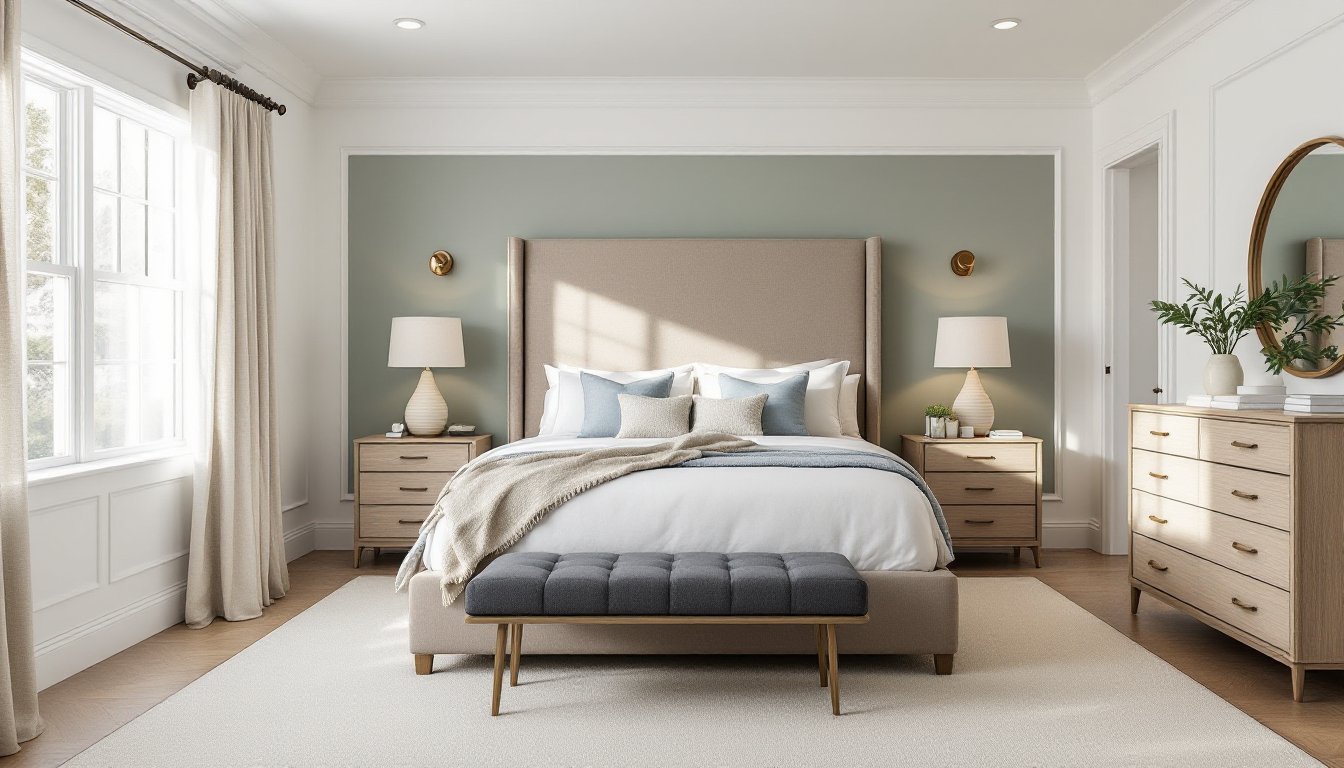
Designing a master bedroom isn’t about following trends, it’s about creating a space that recharges you after a long day. Unlike guest rooms or kids’ bedrooms, the master serves as your private sanctuary, where functionality meets personal comfort. Whether you’re working with a spacious suite or a modest 12×14 room, the same design principles apply: thoughtful layout, intentional color choices, and layered comfort that doesn’t sacrifice storage or style. This guide walks through the essential elements that turn a basic bedroom into a well-designed retreat.
Table of Contents
ToggleKey Takeaways
- Master bedroom interior design balances three core functions—sleep, storage, and personal space—with thoughtful layout and intentional color choices that transform a basic room into a restorative retreat.
- Position your bed where it’s visible from the doorway but not directly aligned with it, leave at least 24 inches of walkway on each side, and align nightstand height with your mattress top (24–28 inches) for comfortable reach.
- Soft, muted color palettes in grays, taupes, dusty blues, and sage greens promote calm; use accent walls strategically behind the bed or at architectural features rather than painting all four walls in high-contrast tones.
- Implement layered lighting with overhead dimmers, individually controlled bedside fixtures at 60–68 inches from the floor, and warm-temperature accent lights (2700K–3000K) to support better sleep quality.
- Anchor your master bedroom with quality textiles between 300–500 thread count, strategically placed rugs extending 18–24 inches beyond the bed, and natural textures like linen and cotton for an organic feel.
- Maximize storage with closet systems using double-hang rods, under-bed drawers, anchored dressers with furniture straps, and floating shelves to keep surfaces clear while maintaining a stylish, functional space.
Essential Elements of Master Bedroom Design
A well-designed master bedroom balances three core functions: sleep, storage, and personal space. Start with the bed, it’s the anchor. Position it where it’s visible from the doorway but not directly in line with it. This creates a sense of arrival without sacrificing privacy.
Scale matters. In a standard 12×12 bedroom, a queen bed leaves enough clearance for nightstands and circulation. Rooms 14×16 or larger can handle a king with a bench at the footboard. Always leave at least 24 inches of walkway on either side of the bed for comfortable movement.
Nightstand height should align with the top of your mattress, typically 24 to 28 inches for most bed frames. This keeps lamps, phones, and books within easy reach without awkward stretching.
Consider architectural features. If you have a tray ceiling or coffered detail, use it to define the sleeping zone. Crown molding adds a finished look but isn’t structural, it’s a cosmetic upgrade that can be DIY’d with a miter saw and some patience.
Don’t ignore the less glamorous details. Bedrooms need adequate electrical outlets, at least one duplex outlet on each wall per the National Electrical Code (NEC). If you’re renovating and opening walls, add outlets behind nightstands and consider USB-integrated receptacles for charging convenience.
Choosing the Perfect Color Palette for Relaxation
Color choice directly impacts how restful a bedroom feels. Soft, muted tones, grays, taupes, dusty blues, sage greens, lower visual stimulation and promote calm. That doesn’t mean sterile: it means intentional.
If you’re repainting, primer is non-negotiable when shifting from a dark or bold color to a lighter one. Two coats of a quality paint (one gallon typically covers 350 to 400 square feet) will give even coverage. Flat or matte finishes hide wall imperfections better than satin, but they’re harder to clean, satin or eggshell is a better choice for bedrooms with kids or pets.
Accent walls work when they highlight architecture, behind the bed, a fireplace wall, or a windowed alcove. Painting all four walls in high-contrast tones can make a room feel smaller. If you want drama, use it in textiles and art instead.
For those interested in bold accent colors, balance is key. One richly colored wall or headboard can anchor the room without overwhelming it. Test paint samples on poster board and move them around the room throughout the day, natural light changes tone significantly.
Warm whites (with beige or yellow undertones) create coziness. Cool whites (with blue or gray undertones) feel crisp and modern. Avoid pure white in bedrooms, it reads clinical unless tempered with warm wood tones or layered textiles.
Furniture Layout and Space Planning Tips
Furniture placement dictates flow. Start by mapping the room to scale, graph paper or a free app works. Mark door swings, windows, closets, and any fixed elements like radiators or built-ins.
Bed placement options:
• Centered on the longest wall: Classic, symmetrical, works in most layouts.
• Angled in a corner: Maximizes floor space in smaller rooms but limits nightstand placement.
• Under a window: Avoid unless the window is high or you’re using blackout shades. Drafts and light leaks disrupt sleep.
Leave 36 inches of clearance at the foot of the bed for comfortable passage. Dressers need at least 30 inches in front for drawer operation. If space is tight, consider a tall chest of drawers instead of a wide, low dresser.
Many design guides suggest creating visual balance through symmetry, but that’s not always practical. In oddly shaped rooms, asymmetry can feel more natural, one nightstand, a floating shelf on the opposite side, and a floor lamp for balance.
Benches, ottomans, and seating areas only work if you have the square footage. In rooms under 200 square feet, skip the extra furniture. It crowds the space and rarely gets used.
If your bedroom doubles as a dressing area, position a mirror where natural light hits it, ideally perpendicular to a window, not opposite. This reduces glare and gives truer color representation for clothing choices.
Lighting Strategies That Create Ambiance
Bedrooms need layered lighting: ambient (overhead), task (reading), and accent (mood). Relying solely on a ceiling fixture creates harsh shadows and limits flexibility.
Start with overhead. If you’re installing a new fixture, a dimmer switch is worth the $15 and 20 minutes of install time. It gives control over brightness without multiple light sources. Dimmers must be compatible with your bulb type, LED bulbs require LED-rated dimmers.
Bedside lighting should be individually controlled. Swing-arm sconces mounted 60 to 68 inches from the floor (measured to the center of the fixture) provide adjustable task lighting without taking up nightstand space. If you’re surface-mounting and not comfortable with electrical work, hire a licensed electrician, bedroom wiring runs through wall cavities and must meet NEC standards.
Table lamps work if nightstands are sturdy and level. Lampshade height should align with your shoulder when seated in bed so light doesn’t shine directly in your eyes.
Accent lighting, LED strip lights under floating nightstands, picture lights on artwork, or low-level floor lighting, adds depth without contributing to sleep disruption. Experts at interior design platforms often recommend warm color temperatures (2700K to 3000K) for bedrooms, as cooler tones (above 4000K) can interfere with melatonin production.
Blackout cellular shades or lined drapes are essential if streetlights or early sun are issues. Even small light leaks reduce sleep quality. Motorized shades are a luxury upgrade but worth considering during a renovation when electrical is already exposed.
Texture, Textiles, and Layering for Comfort
Layering textiles adds warmth and visual interest without permanent changes, ideal for renters or commitment-phobes. Start with the bed: a quality mattress pad or topper, fitted and flat sheets, a duvet or coverlet, and a throw at the foot.
Sheet thread count is oversold. Anything between 300 and 500 in 100% cotton (percale or sateen weave) feels good and wears well. Higher counts aren’t always better and can trap heat.
Duvets offer flexibility, swap the cover seasonally without replacing the insert. Down alternative fills are easier to wash than true down and work for those with allergies.
Throw pillows are decorative but shouldn’t require five minutes of removal before bed. Two to four accent pillows max. Use pillow shams that coordinate with your duvet to tie the look together.
Rug placement anchors the room. In bedrooms, a rug should extend at least 18 to 24 inches beyond each side of the bed. If budget or space limits you, use a runner on each side instead of a full area rug. Underlayment (rug pad) prevents slipping and extends rug life, especially on hardwood or tile.
Curtains should puddle slightly on the floor or hover 1/2 to 1 inch above it. Hanging rods 4 to 6 inches above the window frame and extending 3 to 6 inches on each side makes windows look larger and lets in more light when open.
Natural textures, linen, cotton, wool, jute, create a balanced, organic feel that synthetic fabrics can’t replicate. Mix textures but keep the color palette cohesive to avoid visual clutter.
Storage Solutions That Don’t Sacrifice Style
Master bedrooms accumulate clutter fast, clothing, shoes, linens, seasonal items. Smart storage keeps surfaces clear and the room functional.
Closet systems are the backbone. Wire shelving is cheap but sags under weight. Solid wood or melamine systems (like those from major home centers) offer adjustable shelves and better longevity. Install the top shelf at 84 inches or lower so it’s reachable without a step stool.
Double-hang rods maximize vertical space, mount one at 80 inches and another at 40 inches for shirts and folded pants. Full-length items (dresses, coats) need at least 60 inches of clearance.
Under-bed storage works if your bed frame allows it. Platform beds with built-in drawers or storage boxes on casters keep off-season clothing or extra bedding accessible but hidden. Leave 4 to 6 inches of clearance between the bed base and floor for easy sliding.
Dressers and armoires should be anchored to the wall with furniture straps or L-brackets, this isn’t optional, especially in earthquake-prone areas or homes with children. Tip-overs cause injuries and are preventable with $10 in hardware and ten minutes of work.
Floating shelves above the bed or flanking a window add display space without floor footprint. Use a stud finder and mount with appropriate anchors, drywall anchors rated for 50+ pounds if you’re between studs. Shelves holding books or decor need solid backing.
If you’re designing from scratch, built-ins around the bed or in alcoves are a premium upgrade. They require basic carpentry skills, cutting, leveling, scribing to fit irregular walls, but transform awkward spaces into functional storage. Painting built-ins the same color as walls makes them recede visually, keeping the room feeling open.
Many bedroom design ideas showcase clever storage that integrates seamlessly, proving function and style aren’t mutually exclusive.
Conclusion
Master bedroom design comes down to making deliberate choices about layout, color, lighting, and storage. There’s no one-size-fits-all formula, what works in a 10×12 rental won’t translate to a 16×20 custom build. Focus on the elements that improve daily function: a bed you can walk around comfortably, lighting you can adjust, textiles that regulate temperature, and storage that keeps clutter in check. The rest is personal preference. If a project involves electrical, plumbing, or structural changes, consult local building codes and consider hiring a pro. Otherwise, most bedroom upgrades are well within DIY reach.