Walk into any well-designed room and your eye immediately lands somewhere specific, a fireplace flanked by built-ins, a gallery wall above the sofa, or an oversized piece of art that commands attention. That’s emphasis in interior design at work. It’s one of the core principles that separates professionally designed spaces from rooms that just feel… off. Without a clear focal point, the eye wanders aimlessly, and the room lacks visual hierarchy. But get emphasis right, and you’ve got a space that feels both intentional and inviting, no designer retainer required.
Table of Contents
ToggleKey Takeaways
- Emphasis in interior design directs attention to a specific focal point, creating visual hierarchy that separates professionally designed spaces from rooms that feel unfinished or chaotic.
- Every room needs one dominant focal point—whether an existing architectural feature like a fireplace or a created element like an accent wall—to give the space intentionality and visual organization.
- Color contrast is the fastest and most affordable way to create emphasis; a single accent wall in a bold hue or textured finish immediately commands attention in neutral rooms.
- Scale and strategic placement matter: your focal point should be visible from the room’s entrance, properly sized relative to surrounding furniture, and positioned on the longest wall for maximum impact.
- Avoid the common mistake of multiple competing focal points; every additional element should support your primary focal point rather than fight for attention.
- Each room type benefits from different emphasis strategies—fireplaces and statement sofas in living rooms, headboard walls in bedrooms, chandeliers over dining tables, and tiled backsplashes in kitchens—but the principle of one dominant anchor remains universal.
What Is Emphasis in Interior Design?
Emphasis is the design principle that directs attention to a specific element or area within a room. Think of it as the visual anchor, the thing people notice first when they walk through the door. In practical terms, what is emphasis in interior design? It’s creating a hierarchy of importance using color, scale, placement, and contrast to make one element stand out above the rest.
Every room should have one dominant focal point. That might be an existing architectural feature like a fireplace, a picture window with a view, or a vaulted ceiling with exposed beams. If the room lacks natural focal points, you’ll need to create one, through furniture arrangement, artwork, an accent wall, or a combination of techniques. The key is intentionality. A focal point that happens by accident (like a TV mounted too high or a random piece of oversized furniture) rarely works.
Emphasis interior design isn’t about making everything loud. It’s about strategic contrast. If everything in a room screams for attention, nothing gets heard. A successful focal point draws the eye, then allows it to move naturally to supporting elements. Interior designers use this principle alongside opposition techniques to create visual interest without chaos.
Why Every Room Needs a Focal Point
Without emphasis, a room feels flat and directionless. Your brain craves visual organization, a starting point, a main event, supporting actors. When a space lacks a clear focal point, it reads as cluttered or unfinished, even if it’s technically well-furnished.
A strong focal point also makes decorating decisions easier. Once you’ve identified or created your anchor, everything else falls into place. Furniture arranges itself around the focal point. Color palettes play off it. Lighting highlights it. You’re no longer guessing where to put the sofa or which wall needs artwork.
From a practical DIY standpoint, establishing a focal point can save money. Instead of filling every wall with decor or buying matching furniture sets, you invest in one standout element and let the rest of the room support it with simpler, more affordable pieces. Professional designers at MyDomaine often recommend this approach for homeowners working within a budget.
Focal points also define a room’s function. In a living room, a fireplace or entertainment center signals gathering and relaxation. In a dining room, an eye-catching light fixture over the table anchors the space. Bedrooms benefit from emphasis behind the headboard wall. Even transition spaces like hallways can use focal points, a console table with a mirror, for example, to give them purpose.
Proven Techniques for Creating Emphasis
Using Color and Contrast to Draw the Eye
Color is the fastest, most affordable way to create emphasis. An accent wall in a bold hue or a contrasting color immediately pulls focus. If you’ve got a room painted in neutrals, say, Sherwin-Williams Agreeable Gray or Benjamin Moore White Dove, a single wall in a deep navy, charcoal, or terracotta will command attention.
Paint coverage: Most quality paints cover around 350–400 square feet per gallon. For a standard 10′ × 12′ accent wall (120 square feet), one gallon is plenty, even with two coats.
Contrast doesn’t have to mean color. A textured wall treatment, shiplap, board-and-batten, or even peel-and-stick 3D panels, adds visual weight without paint. Wallpaper works too, especially large-scale patterns or metallics that catch light. Just make sure the substrate is smooth and primed: wallpaper magnifies every imperfection underneath.
Furniture and decor can create color-based emphasis as well. A jewel-toned velvet sofa in an otherwise neutral room becomes the focal point by default. Same with a gallery wall of black-framed art against white walls. When working with colorful design schemes, the trick is to let one color dominate while others support.
Safety note: When painting accent walls, always use a respirator or N95 mask if you’re working with oil-based or high-VOC primers. Ventilate well, open windows and use a box fan to push fumes out.
Scale, Placement, and Architectural Features
Size matters. A large piece of furniture, an oversized mirror, or a floor-to-ceiling bookcase draws the eye simply because it takes up more visual real estate. In a living room, a sectional sofa or a statement armoire can serve as the anchor. In a bedroom, the headboard wall, especially one with built-in shelving or a canopy frame, creates natural emphasis.
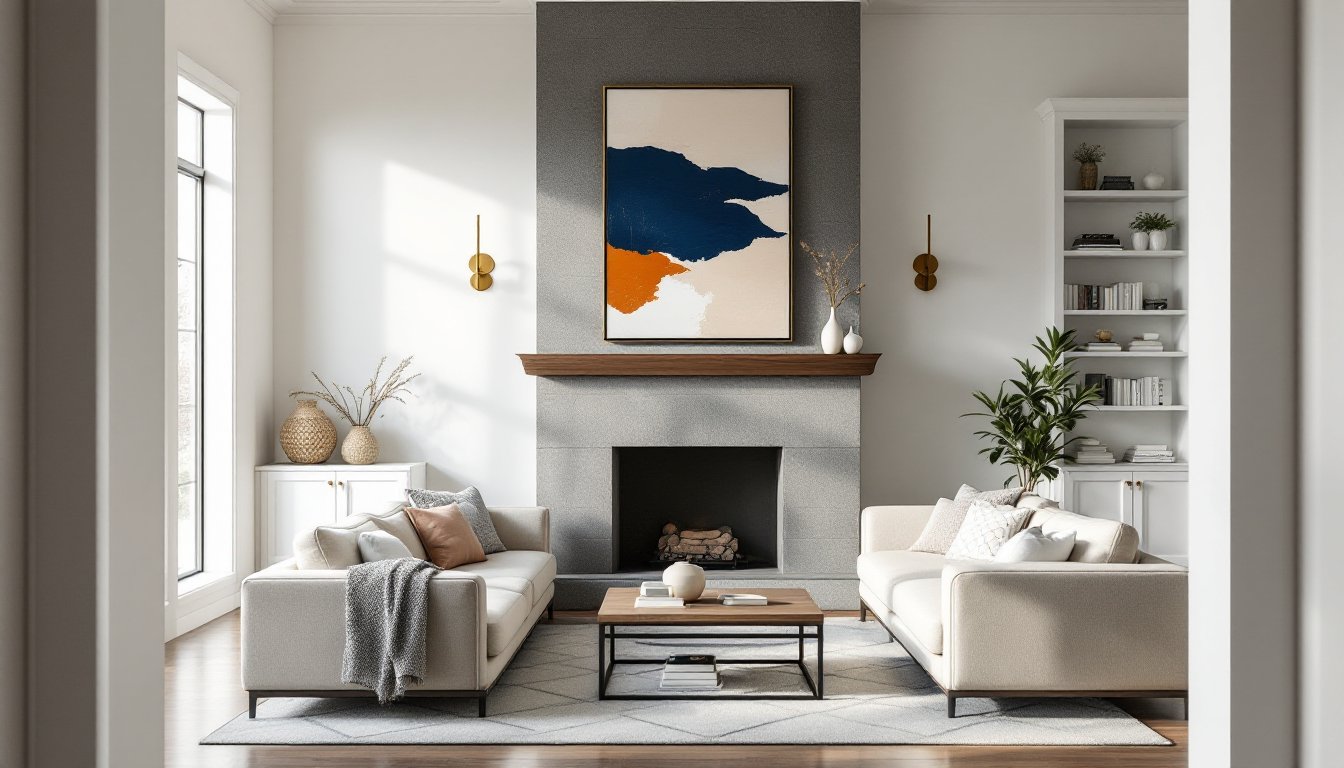
Placement reinforces scale. Position your focal point where it’s visible from the room’s main entry. Center it on the longest wall, or frame it with symmetrical elements like matching sconces or side tables. If you’re working with an existing architectural feature like a fireplace, don’t fight it, lean in. Flank it with built-ins, add a bold mantel, or mount a large piece of art above it.
Architectural features provide built-in emphasis if you’ve got them. Exposed ceiling beams, coffered ceilings, picture windows, or alcoves all create natural focal points. If your room lacks these, you can add them, within reason. Installing crown molding, picture rail, or wainscoting is a manageable weekend project for most DIYers. Installing a coffered ceiling or knocking out a wall for a larger window? That’s permitted structural work best left to a licensed contractor.
Lighting plays a supporting role here. Track lights, picture lights, or LED strip lighting can highlight architectural details or artwork. A statement chandelier or pendant over a dining table becomes the focal point itself. Dimmers let you control intensity, full brightness for task work, lower settings for ambiance. Most dimmers are straightforward to install, but if you’re working with a 3-way switch or replacing old wiring, you’ll want to follow NEC (National Electrical Code) guidelines and consider hiring an electrician if you’re not confident working with live circuits.
Tool note: For hanging heavy mirrors or shelving, use a stud finder and appropriate anchors. Drywall alone won’t hold more than about 10 pounds: hit a stud or use toggle bolts rated for the load.
Common Mistakes to Avoid When Creating Emphasis
The biggest mistake? Multiple competing focal points. If you’ve got a bold accent wall, a massive TV, a gallery wall, and a statement light fixture all fighting for attention, none of them wins. Pick one primary focal point per room. Everything else should support it, not compete with it.
Another misstep is placing the focal point off-center or in a location that disrupts traffic flow. A focal point should be visible from the room’s main entrance, but it shouldn’t block pathways or make the space feel cramped. If you’re arranging furniture around a fireplace, for example, leave at least 30–36 inches of clearance for walking. Measure twice, move once.
Scale errors are common in DIY projects. Artwork that’s too small above a sofa (a single 16″ × 20″ print over a 90″ sofa, for instance) looks like an afterthought. As a rule of thumb, wall art or a gallery wall should span two-thirds to three-quarters the width of the furniture below it. An oversized mirror or a large-scale canvas makes a much stronger statement than a cluster of tiny frames.
Ignoring the room’s existing features is another pitfall. If you’ve got a stunning bay window with natural light, don’t turn your back on it by mounting the TV on the opposite wall and arranging seating to face away. Work with the room’s assets. Designers featured on Elle Decor consistently emphasize this point, your home’s unique features are selling points, not obstacles.
Finally, don’t skip the prep. Painting an accent wall over dirty, glossy, or unprimed drywall leads to uneven coverage and poor adhesion. Sand lightly with 120-grit sandpaper, wipe down with a tack cloth, and use a stain-blocking primer if you’re covering dark or bold colors. Rushing through prep is the fastest way to end up repainting in six months.
Room-by-Room Guide to Establishing Focal Points
Living Room: Start with the fireplace if you have one. If not, the TV often becomes the default focal point (whether you like it or not). Frame the TV with built-ins or a gallery wall to integrate it into the design rather than letting it float awkwardly on the wall. Alternatively, create a seating arrangement around a large coffee table, area rug, and statement sofa to shift emphasis away from screens.
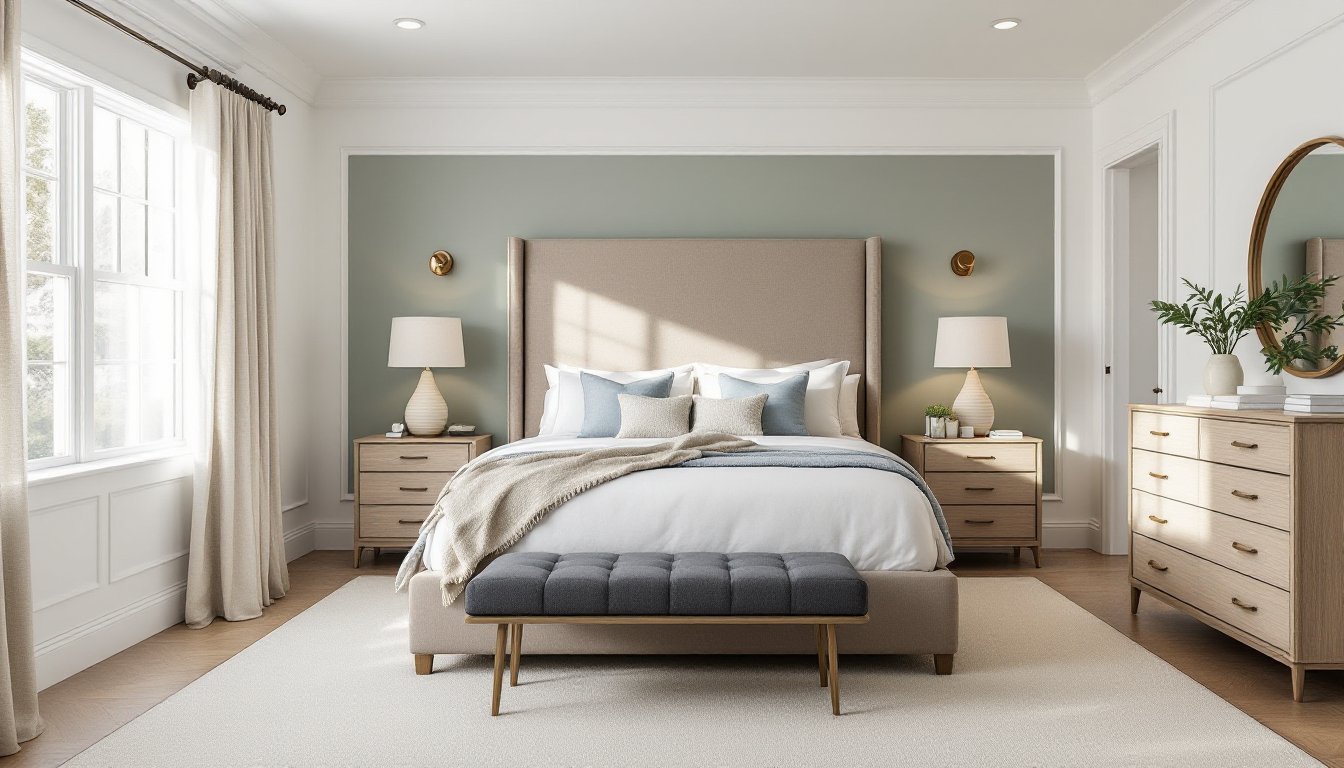
Bedroom: The headboard wall is your focal point. Go vertical with floor-to-ceiling paneling, wallpaper, or a dramatic upholstered headboard. If you’re building a DIY headboard, use 1×6 or 1×8 pine boards for a board-and-batten look, or upholster a plywood frame with batting and fabric secured with a staple gun. This project typically takes 4–6 hours and costs $75–$150 in materials, depending on fabric choice.
Dining Room: A chandelier or pendant light over the table is the classic focal point. Hang it 30–36 inches above the tabletop for proper clearance. If your dining room lacks overhead lighting (common in older homes), adding a ceiling box is doable but may require cutting into drywall and running new wire, plan for a full day and follow local electrical codes.
Kitchen: In open-plan kitchens, the island or range wall often serves as the focal point. A tile backsplash in a bold pattern, color, or material (subway tile, zellige, or slab marble) draws the eye. Installing tile is a solid intermediate DIY project: just make sure your substrate is level and use the right thinset and grout for the tile type. Peel-and-stick options exist but won’t hold up long-term in high-moisture areas.
Bathroom: A freestanding tub, a statement vanity, or a tiled accent wall behind the tub creates emphasis. In smaller bathrooms, a large mirror with good lighting can serve as the focal point. Avoid cluttering countertops, too many bottles and accessories dilute visual impact.
Entryway/Hallway: Even transitional spaces benefit from a focal point. A console table topped with a mirror and a pair of lamps creates symmetry and welcomes guests. In narrow hallways, a runner rug in a bold pattern or a gallery wall can guide the eye and add personality without taking up floor space. Drawing inspiration from resources like Homedit can help you see how small spaces benefit from intentional design choices.
No matter the room, the principle remains the same: one dominant element, supported by complementary design choices. Emphasis creates order, guides the eye, and gives every space a sense of purpose.