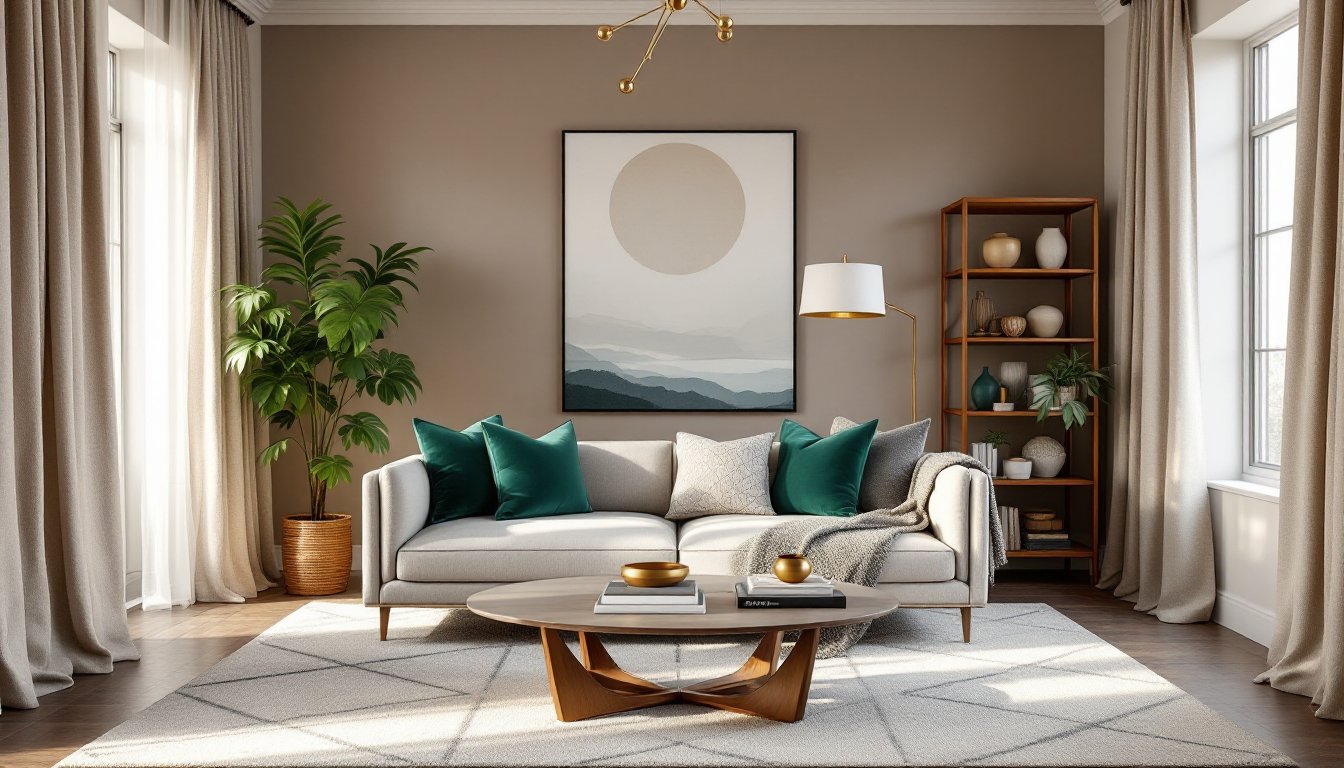
Creating a luxurious living room isn’t just about throwing money at expensive furniture. It’s about understanding how materials, proportion, lighting, and layering work together to create a space that feels intentional and elevated. Whether you’re working with a grand open-concept room or a modest 12×14 space, the principles remain the same: quality beats quantity, details matter, and every decision should serve both function and visual impact. This guide walks through the core elements that separate high-end design from merely expensive decoration.
Table of Contents
ToggleKey Takeaways
- Living room luxury interior design prioritizes craftsmanship, proportion, and restraint over expensive items—invest 40-50% of your furniture budget in a quality statement sofa that serves as the room’s anchor.
- Material quality reveals itself through durability and aging: choose full-grain leather, quarter-sawn wood with hand-applied finishes, and natural fibers like wool and linen over synthetics and particleboard.
- Implement three-layer lighting (ambient, task, and accent) with dimmer switches to create the sophisticated ambiance that defines high-end spaces—a single overhead fixture cannot achieve this effect.
- Build a cohesive color palette using the 60-30-10 rule: 60% neutral base (warm grays, taupe), 30% secondary color (deep navy or forest green), and 10% jewel-tone accents for visual sophistication.
- Layer at least five different textures—smooth, soft, rough, reflective, and tactile—and use large rugs, varied pillow sizes, and mixed textiles to prevent the space from feeling flat or sterile.
- Limit metal finishes to one family (warm or cool tones) and restrict wood tones to one or two species per room to maintain visual cohesion and avoid an unintentional appearance.
What Defines Luxury in Living Room Design?
Luxury in a living room comes down to three core elements: craftsmanship, proportion, and restraint. It’s not about cramming a room with high-ticket items, it’s about selecting fewer, better pieces that demonstrate attention to detail.
Craftsmanship shows up in joinery, finish quality, and material integrity. Look for hand-applied finishes on wood furniture, full-grain leather upholstery instead of bonded or corrected grain, and hardware that operates smoothly with no wobble. These details might not photograph well, but they’re what you notice when you live with a piece daily.
Proportion means furniture that fits the room’s scale. A sectional shouldn’t crowd out circulation space, leave at least 36 inches of walkway clearance around major pieces. Coffee tables typically sit 14-18 inches from sofa edges. Ceiling height matters, too: in rooms with 9-foot or higher ceilings, taller bookcases, vertical artwork, and statement lighting help fill the volume without making the space feel bottom-heavy.
Restraint is the hardest part. High-end spaces often feature neutral palettes punctuated by one or two statement elements rather than competing focal points. Professional designers typically limit a room to three primary materials and two metal finishes to maintain visual cohesion.
Choosing Premium Materials and Finishes
Material selection telegraphs quality faster than anything else in a room. Cheap materials reveal themselves in how they age, wear, and reflect light.
Wood finishes should show depth and grain. Quarter-sawn oak, walnut, and teak hold up better than veneer over particleboard. Check drawer boxes, dovetail joinery and soft-close hardware are standard in quality case goods. If refinishing existing pieces, use pre-catalyzed lacquer or conversion varnish for a durable, furniture-grade finish: polyurethane tends to yellow and look plasticky over time.
Stone and tile make a difference underfoot and on surfaces. Natural marble, limestone, or travertine bring unique veining and texture, but require sealing every 6-12 months in high-traffic areas. For low-maintenance alternatives, porcelain slabs now mimic natural stone convincingly at $8-$15 per square foot installed, versus $25-$50+ for genuine marble.
Upholstery fabrics should be rated for durability. Look for 25,000+ double rubs (Wyzenbeek test) for sofas and chairs. Natural linens and wools develop patina gracefully: synthetics pill and fade. Performance fabrics from companies like Crypton or Sunbrella now offer stain resistance without the plasticky hand of earlier generations.
Metal finishes tie a room together when used consistently. Mixing warm metals (brass, bronze, gold) with cool (nickel, chrome) reads as unintentional. Pick one family and stick to it across lighting, hardware, and accents. Oil-rubbed bronze and unlacquered brass both develop patina, if that bothers you, choose satin nickel or polished chrome.
Selecting the Perfect Color Palette for Elegance
Luxury palettes tend toward sophisticated neutrals with carefully chosen accent tones. That doesn’t mean beige walls and white trim, it means building a 60-30-10 color distribution: 60% dominant neutral, 30% secondary color, 10% accent.
For dominant neutrals, consider warm grays (greige), soft taupes, or deep charcoals rather than stark white or builder beige. Benjamin Moore’s Revere Pewter (HC-172) and Sherwin-Williams Accessible Beige (SW 7036) are workhorses for a reason, they read neutral in most lighting without looking flat. Test samples on at least two walls: north-facing rooms skew cooler, south-facing warmer.
Secondary colors establish mood. Deep navy, forest green, or charcoal work in modern French interior styles that lean traditional: slate blue or sage suit more contemporary spaces. Use this color on an accent wall, large furniture pieces, or window treatments.
Accent colors appear in pillows, art, and accessories. Jewel tones, emerald, sapphire, ruby, read luxurious in small doses. Metallics (gold, brass, copper) count as accents, not neutrals.
Sheen matters as much as color. Matte or eggshell finishes (10-20% sheen) hide wall imperfections and look more sophisticated than satin or semi-gloss in living areas. Save higher sheens for trim and doors. One gallon of quality paint covers approximately 350-400 square feet per coat: budget for two coats minimum.
Furniture Selection: Investing in Statement Pieces
In luxury design, one exceptional piece beats five mediocre ones. Plan to allocate 40-50% of your furniture budget to a statement sofa or sectional, it anchors the room and gets the most use.
Sofas worth the investment feature eight-way hand-tied springs rather than sinuous (S-shaped) springs or webbing. The frame should be kiln-dried hardwood (maple, oak, or ash), not softwood or engineered lumber. Cushions come down to preference: down-wrapped foam offers the sink-in comfort of down with better shape retention: high-resilience foam (density of 2.0+ pounds per cubic foot) holds up longer than standard poly foam.
Seating height and depth affect comfort. Standard seat height runs 17-19 inches: go lower (16-17 inches) for a lounge feel, higher (19-20 inches) if anyone in the household has mobility issues. Seat depth of 22-24 inches suits most people: deeper looks dramatic but can be uncomfortable without extra lumbar pillows.
Coffee tables and accent tables should relate proportionally to seating. Coffee table height typically matches or sits 1-2 inches lower than sofa seat height. Length should be roughly two-thirds the sofa length. Materials like solid wood, marble, or metal and glass combinations read more upscale than laminate or particleboard.
Case goods (bookcases, consoles, credenzas) provide storage and display. Built-ins deliver a custom look, but quality freestanding pieces offer flexibility. Avoid anything with visible staples, unfinished backs, or thin veneer that shows particle board at the edges. Designers who practice harmony in material selection often limit wood tones to one or two species per room.
Lighting Design to Create Ambiance and Drama
Lighting is where most DIY luxury attempts fall apart. A single overhead fixture, no matter how expensive, can’t create the layered illumination that defines high-end living spaces.
Plan for three lighting layers: ambient, task, and accent. Ambient lighting comes from ceiling fixtures (chandeliers, flush mounts, recessed cans). In a standard living room, budget 2-3 watts of LED per square foot for adequate general lighting. That translates to roughly 300-450 lumens per square foot. Dimmer switches are non-negotiable, install LED-compatible dimmers to avoid flickering.
Task lighting includes reading lamps, floor lamps near seating, and picture lights. Position reading lamps so the bottom of the shade sits at shoulder height when seated (typically 40-42 inches from the floor for table lamps, 48-52 inches for floor lamps). Use 3000K bulbs for warm white that flatters skin tones and wood finishes: avoid cool 4000K+ temps in living spaces.
Accent lighting highlights architectural features, art, or texture. Track lighting, wall sconces, and LED strip lighting work here. A common mistake is over-lighting, not every corner needs illumination. Create contrast by leaving some areas in shadow.
Chandelier sizing follows a rough formula: add room length and width in feet, then convert to inches for fixture diameter. A 14×16-foot room calls for a chandelier around 30 inches in diameter. Hang chandeliers 30-36 inches above dining or coffee table surfaces: in open floor plans without a table underneath, the bottom should clear 7 feet from the floor minimum.
Statement fixtures, sculptural pendants, multi-arm chandeliers, or oversized drum shades, draw the eye up and add architectural interest. Interior design galleries frequently showcase rooms where lighting functions as art.
Layering Textures and Accessories for Depth
Texture prevents even the most carefully designed room from feeling flat or sterile. Luxury spaces mix at least five textures: smooth (glass, polished stone), soft (velvet, cashmere), rough (raw wood, textured plaster), reflective (mirrors, metallics), and tactile (leather, linen).
Textiles offer the easiest layering opportunities. Combine a linen sofa with velvet pillows, a chunky knit throw, and a wool or silk rug. Avoid matching pillow sets, mix sizes (22-inch, 20-inch, and 18-inch squares or 12×20-inch lumbar pillows) and combine patterns with solids. Odd numbers (three or five pillows per sofa) look more intentional than even groupings.
Rugs ground a seating area and add warmth. In living rooms, the rug should be large enough that at least the front legs of all major seating pieces rest on it. For a standard 12×14-foot room, that typically means a 9×12 or 8×10 rug. Natural fibers, wool, silk, jute, sisal, wear better and feel more substantial than synthetics. Hand-knotted wool rugs range from $30-$150+ per square foot depending on origin and knot count: quality machine-made options start around $15-$25 per square foot.
Window treatments soften hard surfaces and control light. Luxury treatments often combine sheer underlayers with heavier drapes for flexibility. Hang curtain rods 4-6 inches above the window frame and extend 6-12 inches beyond each side to make windows appear larger. Panels should either kiss the floor or puddle slightly (1-2 inches): stopping short looks unfinished. Those exploring colorful applications might use drapes as an accent color opportunity.
Accessories include art, books, sculptural objects, and plants. Edit ruthlessly, fewer, better pieces create impact. Group accessories in odd numbers and vary heights. Real plants (fiddle leaf figs, snake plants, monstera) bring life and texture that faux versions can’t match. Professional designers emphasize transitional balance by mixing organic and geometric forms.
Conclusion
Transforming a living room into a luxury space doesn’t require an unlimited budget, it requires discipline. Invest in foundational pieces with proven durability, choose materials that age gracefully, and resist the urge to fill every surface. When decisions come down to one quality item or three mediocre ones, choose quality. The difference shows in how a room feels to live in, not just how it photographs.