Tulsa’s interior design scene is having a moment. Between the city’s distinct architectural heritage, Art Deco gems, mid-century ranches, and sprawling prairie-style homes, and a growing community of skilled local designers, homeowners have more options than ever to reimagine their spaces. Whether you’re planning a full renovation or tackling weekend projects, understanding what works in Tulsa’s climate and aesthetic landscape can save time, money, and frustration. This guide walks through the styles gaining traction locally, how to choose an approach that fits your home’s bones, and practical DIY projects that stand up to Oklahoma’s temperature swings and humidity.
Table of Contents
ToggleKey Takeaways
- Interior design in Tulsa thrives by partnering with local designers who understand regional architecture, climate challenges, and the permitting process better than out-of-state consultants.
- Modern Farmhouse and Mid-Century Modern with Art Deco influences are the two dominant interior design styles in Tulsa, each suited to specific home eras and architectural bones.
- Choose an interior design approach by assessing your home’s existing architecture—ceiling height, window placement, trim quality, and floor plan flow—rather than forcing trendy styles onto incompatible homes.
- Oklahoma’s humidity and temperature swings demand moisture-resistant DIY materials like latex paint, ceramic tiles with epoxy grout, and proper expansion gaps for flooring transitions.
- Local resources like Tulsa’s ReStore salvage yard, public library design collection, and community home tours provide affordable inspiration and authentic materials that reflect Tulsa’s architectural heritage.
- Test paint colors in your actual lighting conditions and across multiple walls before committing, as north- and south-facing rooms shift color perception dramatically throughout the day.
Why Tulsa Homeowners Are Embracing Local Interior Design
Tulsa’s design community has matured significantly over the past decade. Homeowners are moving away from cookie-cutter online trends and toward designers who understand regional context, how to work with existing architecture, where to source reclaimed materials from local salvage yards, and which finishes hold up against Oklahoma’s freeze-thaw cycles and summer humidity.
Local designers bring practical knowledge that out-of-state consultants can’t match. They know which HVAC configurations work best for open-concept conversions in older homes, where load-bearing walls typically sit in Tulsa’s common floor plans, and how to navigate the city’s permitting process for structural changes. That expertise matters when you’re opening up a galley kitchen or adding built-ins to a 1950s ranch.
Cost is another factor. Working with local design professionals often means lower travel fees, faster site visits, and access to regional trade discounts. Many Tulsa designers also offer hourly consultations for DIYers who want professional input on layout or material selection without committing to full-service design.
The city’s architectural diversity demands flexibility. A designer versed in Tulsa’s housing stock can adapt modern finishes to complement a 1920s bungalow’s original trim or help preserve Art Deco details during a bathroom remodel. That kind of nuance gets lost when following generic design templates.
Popular Interior Design Styles in Tulsa Homes
Tulsa’s design preferences reflect its geographic and cultural position, rooted in prairie traditions but open to contemporary influences. Two styles dominate local projects, each with distinct material palettes and layout priorities.
Modern Farmhouse and Prairie-Inspired Aesthetics
This style leans heavily on natural materials: white oak flooring, shiplap (actual tongue-and-groove boards, not the peel-and-stick variety), and exposed structural beams. Tulsa’s version often incorporates native stone accents, Oklahoma flagstone or moss rock, especially around fireplaces or exterior-facing walls.
Color schemes stay neutral: Sherwin-Williams Alabaster or Benjamin Moore White Dove for trim, warmer tans or greiges for walls. Hardware trends toward matte black or oil-rubbed bronze, which hides fingerprints better than polished finishes, a practical choice for high-traffic areas.
Kitchens in this style typically feature shaker-style cabinets (inset or overlay), butcher-block countertops or leathered granite, and farmhouse sinks (33-inch undermount models are standard). Open shelving works if you’re committed to keeping dishes organized: otherwise, upper cabinets with glass inserts offer a middle ground.
One caution: prairie-inspired designs work best in homes with good bones, original wood floors, high ceilings, or craftsman-era trim. Forcing farmhouse elements into a 1980s builder-grade home often looks like a stage set. If your home lacks architectural detail, consider adding it through DIY wainscoting or picture-rail molding before layering in décor.
Mid-Century Modern Meets Art Deco Heritage
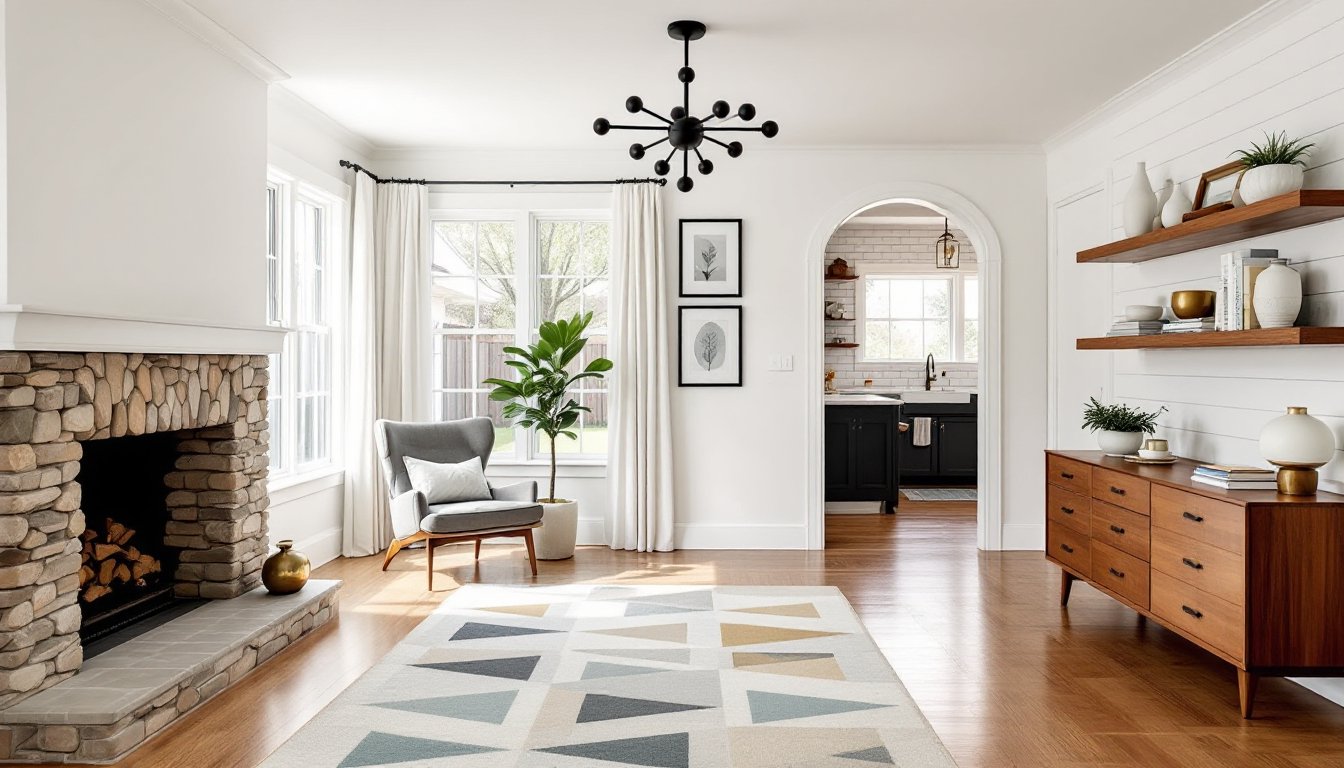
Tulsa’s Art Deco landmarks, buildings like the Philcade and Boston Avenue Methodist Church, inspire a second design current. This style emphasizes clean lines, geometric patterns, and rich wood tones like walnut or teak.
Furniture sits low to the ground with tapered legs. Color palettes mix warm neutrals with bold accent tones: mustard yellow, burnt orange, or teal. Terrazzo flooring (or modern porcelain versions that mimic terrazzo) appears in bathrooms and entryways, nodding to Tulsa’s historic commercial buildings.
Lighting matters here, sputnik chandeliers, globe pendants, and sconce fixtures with brass or black finishes. If you’re retrofitting vintage fixtures, verify they’re rated for modern LED bulbs and meet current NEC electrical codes (especially about junction box support for heavier fixtures).
This approach works well in Tulsa’s mid-century ranch homes, which already have the horizontal lines and open floor plans that define the style. Adding period-appropriate tile, hex mosaics in bathrooms, large-format square tiles in kitchens, reinforces the aesthetic without major structural work.
How to Choose the Right Interior Design Approach for Your Tulsa Home
Start with your home’s existing architecture. Don’t fight it. A 1970s split-level will never convincingly pull off farmhouse rustic, but it’s a natural fit for updated mid-century modern. Walk through your house and note:
- Ceiling height: Rooms under 8 feet read as cramped with heavy beams or dark colors. Stick to lighter palettes and minimal trim.
- Window placement and size: Large south-facing windows suit styles with layered textiles (to manage glare): small windows work better with lighter wall colors to maximize natural light.
- Existing trim and molding: Removing original craftsman trim to install shiplap is almost always a mistake. Preserve quality millwork and build your palette around it.
- Floor plan flow: Open concepts favor cohesive color schemes across rooms. Compartmentalized layouts let you shift styles between spaces.
Consider Tulsa’s climate demands. High humidity in summer means oil-based paints cure slowly and require proper ventilation (box fans in windows, not just cracked doors). Latex paints are more forgiving for DIYers. In winter, low humidity can cause wood floors and trim to contract, leave expansion gaps (typically 1/2 inch) around perimeter flooring.
If you’re hiring a designer, ask about their experience with your home’s era and style. Request references for projects similar in scope. A designer who specializes in new construction might struggle with the quirks of a 1940s bungalow, uneven floors, plaster walls, knob-and-tube wiring that limits lighting options.
Budget realistically. Full-service design typically runs $75–$150 per hour in Tulsa, or 10–20% of project costs for comprehensive services. Hourly consultations ($100–$200 for a two-hour session) can guide material selection and layout without very costly. Many homeowners blend professional input with DIY execution to control costs.
DIY Interior Design Projects That Work in Tulsa’s Climate
Oklahoma’s weather, hot, humid summers and occasional ice storms, dictates which DIY projects hold up long-term. Focus on moisture-resistant materials and proper ventilation.
Painted accent walls are low-risk, high-impact. Use interior latex paint with a satin or eggshell finish (easier to clean than flat). For darker colors, apply tinted primer first to reduce coats needed. Allow 24 hours between coats in humid months: rushing leads to poor adhesion.
Peel-and-stick backsplash tiles work in low-moisture areas (above a range, not behind a sink). In higher-humidity kitchens, traditional ceramic subway tiles with epoxy grout resist mildew better. Installation requires a wet tile saw (rentable at most Tulsa tool libraries or home centers for $40–$60/day) and 1/8-inch spacers for consistent grout lines.
Floating shelves add storage without the cost of cabinetry. Use 2×10 or 2×12 lumber (actual dimensions: 1.5″ × 9.25″ or 1.5″ × 11.25″). Mount to studs with 3-inch wood screws or use toggle anchors rated for 50+ pounds if studs aren’t positioned where you need them. Stain with oil-based polyurethane for durability, or paint to match trim.
Window treatments matter in Tulsa’s temperature extremes. Cellular shades provide insulation (R-value up to 5, depending on cell size) and reduce HVAC costs. For DIY roman shades, use blackout lining fabric to block western sun in summer. Patterns and techniques abound on platforms like Homedit, where room-specific ideas help tailor projects to your space.
Flooring transitions between rooms often get overlooked. When switching from engineered hardwood (living room) to luxury vinyl plank (kitchen), use a T-molding transition strip in the doorway. These come in various finishes: match to the darker of the two floors for a cohesive look. Install after both floors are down, leaving a 1/4-inch gap on each side for seasonal expansion.
Avoid DIY projects that require permits or structural changes: moving load-bearing walls, altering electrical beyond replacing fixtures, or adding windows. Tulsa requires permits for most structural work, and inspections ensure safety. Hire a licensed contractor for anything that affects your home’s framing or systems.
Finding Inspiration: Tulsa’s Best Resources for Design Ideas
Tulsa offers both local and digital resources for design inspiration. Start by touring homes in your target style. The Tulsa Foundation for Architecture hosts periodic home tours showcasing restored historic properties, many highlight original Art Deco or mid-century details that inform modern updates.
Local salvage yards like ReStore (Habitat for Humanity’s outlet) stock reclaimed materials at steep discounts: solid wood doors, vintage light fixtures, and architectural trim. Shopping salvage requires patience, but you’ll find one-of-a-kind pieces that add character generic big-box materials can’t match.
Online platforms provide broader idea pools. Homify aggregates project galleries by style and room type, with search filters for specific features (breakfast nooks, walk-in closets, mudroom storage). It’s useful for visualizing how different finishes combine in real spaces, not just styled photoshoots. Exploring resources related to harmony in interior design can also guide color and material pairings that feel cohesive.
Tulsa’s design community is active on social media. Follow local designers and renovation accounts to see projects in homes similar to yours. Many share material sources, paint colors, and contractor recommendations, practical intel you won’t find in national magazines.
For color confidence, visit a local paint store (not a big-box retailer) and request sample pots. Test colors on multiple walls in the room, observing how they shift throughout the day. North-facing rooms skew cooler: south-facing rooms amplify warm tones. What looks perfect at noon might feel off at 7 p.m.
If your project involves using bold hues, test samples in the actual lighting conditions of your space, artificial light from LEDs (typically 2700K–3000K for residential) will shift color temperature compared to natural daylight.
Practical design inspiration often comes from problem-solving. If you’re working with transitional aesthetics, study how different materials bridge style gaps, like pairing traditional crown molding with contemporary slab-door cabinets. Visual documentation helps: taking quality photos of your space before and during projects clarifies what works and what needs adjustment.
Don’t overlook Tulsa’s public library system. The downtown branch maintains a design collection with books on regional architecture, historical preservation, and material selection. It’s free, and many titles include detailed how-to sections for common renovations.
Set up a project binder, physical or digital, with measurements, material specs, and inspiration images. When consulting with contractors or designers, having references speeds communication and reduces misunderstandings. Include notes on existing conditions (plaster vs. drywall, HVAC vent locations, electrical panel capacity) so professionals can provide accurate estimates without multiple site visits.