Small rooms don’t have to feel cramped or cluttered. With the right design decisions, even the tightest spaces can feel open, functional, and inviting. The key isn’t square footage, it’s how you use what you’ve got. This guide walks through proven strategies for making small rooms work harder: choosing colors that visually expand walls, selecting furniture that earns its footprint, leveraging vertical space, optimizing lighting, and using mirrors to create depth. These aren’t tricks or gimmicks, they’re practical design principles that homeowners and renters alike can apply to bedrooms, home offices, studio apartments, or any room where space is at a premium.
Table of Contents
ToggleKey Takeaways
- Light, neutral color palettes and strategic color blocking make small rooms feel larger by reflecting light and creating visual continuity without cramped sensations.
- Multifunctional furniture like storage beds, sofa beds, and expanding tables maximize square footage by serving dual purposes and eliminating single-use pieces.
- Vertical storage solutions—including floating shelves, wall-mounted racks, and floor-to-ceiling cabinetry—transform underutilized wall space into functional storage without reducing floor area.
- Layered lighting combining ambient, task, and accent lighting compensates for limited space and makes rooms feel more open than relying on a single overhead fixture.
- Strategically placed mirrors opposite windows and reflective surfaces multiply natural light and create the illusion of depth in small room interior design.
- Proper installation of storage fixtures and mirrors using appropriate hardware and safety measures ensures both functionality and protection in compact living spaces.
Choose the Right Color Palette to Expand Your Space
Color is one of the most powerful tools in small room design, and it costs nothing but a few cans of paint. Light, neutral tones, soft whites, pale grays, beiges, and cool pastels, reflect more light and make walls recede visually. This creates the illusion of a larger footprint without moving a single stud.
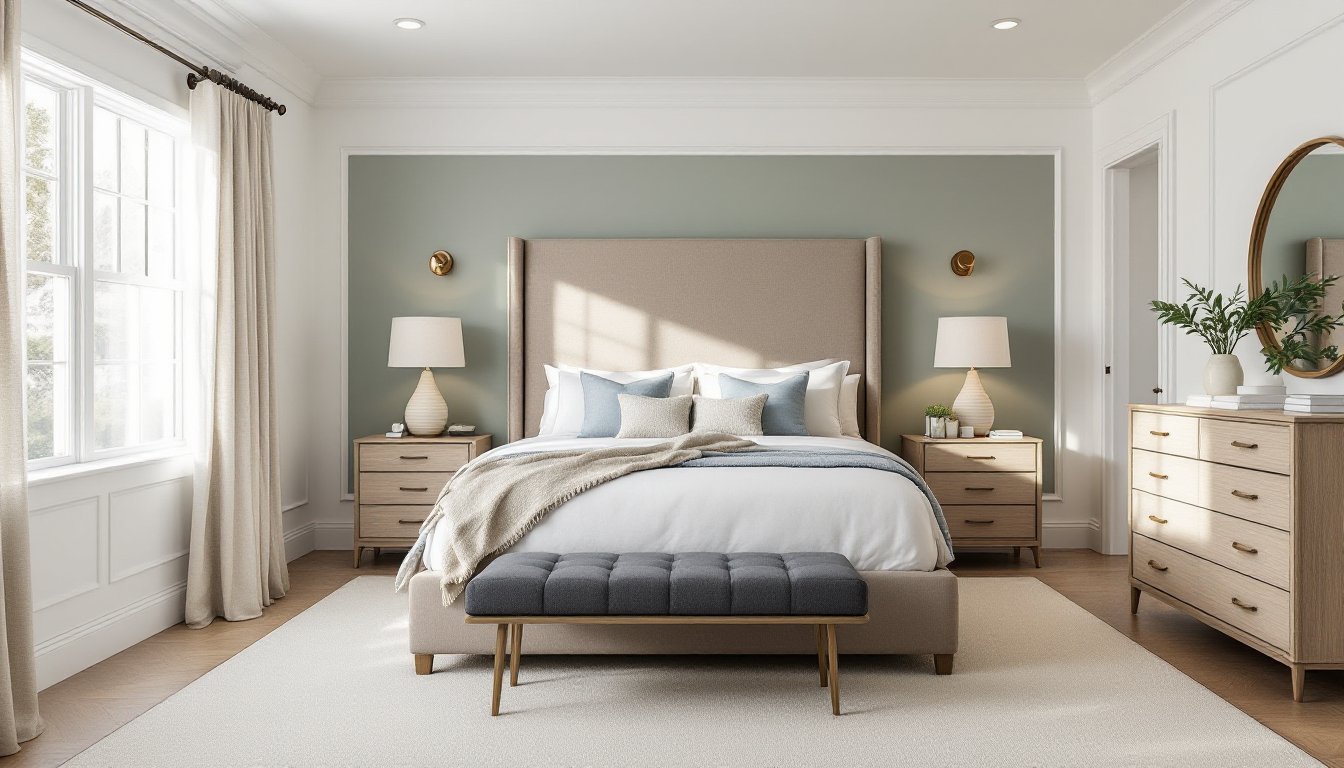
Dark colors aren’t off-limits, but they require intention. A deep charcoal or navy on one accent wall can add depth, especially when the other three walls stay light. This technique, called color blocking, prevents the space from feeling like a shoebox while still giving it character.
Monochromatic schemes also work well in tight quarters. Sticking to variations of a single hue, say, three shades of blue, reduces visual clutter and creates a cohesive flow. Contrast pulls the eye and fragments space: continuity stretches it.
Ceiling color matters too. Painting the ceiling the same shade as the walls, or just one step lighter, blurs the boundary between vertical and horizontal planes. This trick makes ceilings feel higher and rooms feel airier. Conversely, a stark white ceiling in a small, dark room can feel like a lid.
Finish type plays a role. Satin or eggshell finishes bounce light better than flat paint, adding subtle luminosity without the glare of full gloss. In spaces with good natural light, this finish enhances the effect of your colorful interior design choices without overwhelming the senses.
Select Multifunctional Furniture for Small Rooms
In a small room, every piece of furniture needs to justify its presence. Single-purpose items eat up precious square footage fast. Multifunctional furniture solves this by packing two or three uses into one footprint.
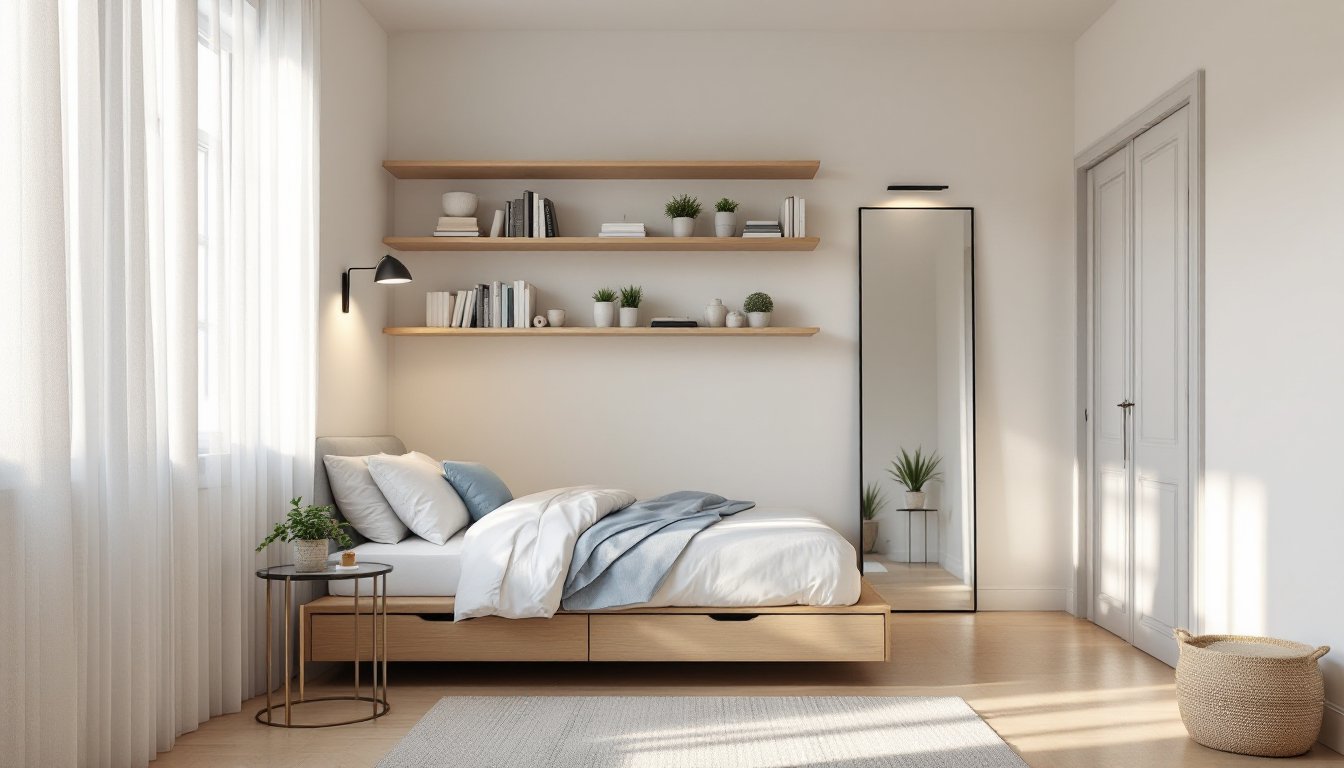
Start with storage beds. Platform beds with built-in drawers underneath replace a dresser and eliminate the dead zone under the mattress. Some models offer hydraulic lift mechanisms that reveal a full storage compartment, ideal for seasonal clothing, extra bedding, or rarely used gear. Just make sure there’s enough clearance to lift the mattress: measure ceiling height if you’re in a basement or attic conversion.
Sofa beds and futons have come a long way. Modern designs ditch the clunky bar-in-the-back feel for actual comfort. Look for models with memory foam mattresses and sturdy hardwood frames, not particleboard. A quality sofa bed turns a home office into a guest room without needing a separate bedroom.
Expanding dining tables and nesting coffee tables adapt to your needs. A drop-leaf table or one with a butterfly leaf stays compact most of the time but seats six when company arrives. Nesting tables tuck away when not needed and pull out for extra surface area during game night.
Ottomans with storage double as seating, footrests, and hidden compartment space. Choose one with a removable lid and you’ve got a spot to stash throw blankets, remotes, or kids’ toys.
When shopping, measure doorways and hallways before you buy. A sectional that fits the room might not fit through the door. Check nominal dimensions and compare them to your tape measure, not the product photo. Many retailers now offer modular furniture designed specifically for tight spaces, with pieces that disassemble for easier maneuvering.
Use Vertical Space and Strategic Storage Solutions
Most people underuse the upper third of their rooms. Walls offer storage real estate that doesn’t compete with floor space, and going vertical draws the eye upward, which makes ceilings feel higher.
Wall-Mounted Shelving and Floating Storage
Floating shelves are the workhorse of small-room storage. They provide display and storage without the visual bulk of a bookcase. Install them with heavy-duty brackets rated for the load, standard drywall anchors won’t cut it if you’re stacking hardcover books or dishware. For solid support, mount directly into studs using 3-inch wood screws, or use toggle bolts rated for at least 50 pounds per anchor in drywall.
Kitchens and bathrooms benefit from wall-mounted racks and pegboards. A pegboard above a desk or workbench keeps tools, supplies, and accessories visible and within reach without cluttering drawers. In the kitchen, magnetic knife strips, hanging pot racks, and wall-mounted spice shelves free up counter and cabinet space.
Corner shelves exploit dead zones. Floating corner units or ladder-style shelving fit into areas that standard furniture can’t, turning wasted space into functional storage. These work especially well in bedrooms and home offices.
Be mindful of wall type. Drywall requires anchors: plaster needs different hardware. If you’re mounting heavy loads on a plaster wall, pre-drill with a masonry bit to avoid cracking. Always wear safety goggles when drilling overhead.
Floor-to-Ceiling Design Elements
Floor-to-ceiling bookcases and cabinets maximize vertical capacity. Custom-built units can fit awkward nooks and make use of every inch from baseboard to crown molding. If custom work isn’t in the budget, stackable modular units achieve a similar effect at a fraction of the cost.
Tall, narrow storage cabinets, sometimes called pantry cabinets or linen towers, fit into slim gaps between appliances or next to doorways. An 18-inch-wide cabinet can hold a surprising amount when it’s 84 inches tall.
Installing shelving or cabinetry above doorways and windows captures otherwise unused space. These high shelves work well for items you don’t need daily: holiday decor, archival boxes, or extra linens. Just make sure they’re secured into the header or framing, not just drywall.
Many small-space dwellers overlook closet interiors. Adding a second rod, shelf dividers, or hanging organizers doubles capacity without expanding the closet footprint. A well-organized closet can eliminate the need for a separate dresser, freeing up bedroom floor space. Designers focused on harmony interior design often emphasize vertical storage to maintain visual balance and reduce clutter.
Maximize Natural Light and Layer Artificial Lighting
Lighting has a direct impact on how spacious a room feels. Poor lighting makes even large rooms feel cramped: good lighting opens up tight spaces.
Start by maximizing natural light. Keep window treatments minimal. Heavy drapes and dark blinds block light and visually shrink windows. Opt for sheer curtains, roller shades, or top-down/bottom-up blinds that let light in while maintaining privacy. If privacy isn’t a concern, skip window treatments entirely.
Clean windows regularly. Grime and dust reduce light transmission more than most people realize. A quick wipe-down with glass cleaner can noticeably brighten a room.
When natural light is limited, layered artificial lighting compensates. Relying on a single overhead fixture creates harsh shadows and uneven illumination. Instead, combine three types:
- Ambient lighting (overhead fixtures, recessed cans) provides general illumination.
- Task lighting (desk lamps, under-cabinet strips, reading lights) focuses light where you need it.
- Accent lighting (wall sconces, picture lights, LED strips) highlights architectural features and adds depth.
In small rooms, wall sconces save floor and table space that lamps would occupy. Mount them at 60–66 inches above the floor for optimal light distribution. Battery-powered or plug-in sconces work if you don’t want to run new wiring.
LED strip lighting under shelves, cabinets, or along baseboards adds ambient glow without taking up any real estate. Choose warm white (2700–3000K) for living spaces and cool white (4000–5000K) for task areas like kitchens or workshops.
Dimmer switches give you control over light intensity and mood. Installing a dimmer is straightforward, turn off the breaker, swap the existing switch for a compatible dimmer, and restore power. Just make sure your bulbs are dimmable: not all LEDs are. According to design experts at Apartment Therapy, layered lighting is one of the most underutilized tools in small-space makeovers.
Create Visual Depth with Mirrors and Reflective Surfaces
Mirrors are the closest thing to magic in small room design. They reflect light, create the illusion of depth, and can make a single window feel like two.
Place a large mirror opposite or adjacent to a window to bounce natural light deeper into the room. A floor-to-ceiling mirror or a wide horizontal mirror above a sofa can visually double the perceived width or height of a space. Avoid placing mirrors directly across from each other, this creates an infinite reflection loop that feels disorienting rather than expansive.
Mirrored furniture, like console tables, nightstands, or cabinet doors, adds reflective surface area without the weight of a full mirror. The effect is subtler but still opens up the room. Mirrored closet doors are a classic small-bedroom solution for a reason.
Frameless or thin-framed mirrors feel more modern and less visually heavy than ornate frames. If you prefer a frame, choose something narrow and in a finish that matches your other hardware (brushed nickel, matte black, brass).
When mounting mirrors, use appropriate hardware. A 30-pound mirror needs more than a picture hook. Use D-ring hangers on the back of the mirror and heavy-duty wall anchors or screws into studs. For large mirrors, consider mirror clips or a French cleat system, which distributes weight along a horizontal rail.
Reflective surfaces beyond mirrors also contribute. Glossy tiles, glass tabletops, metallic light fixtures, and high-gloss paint all bounce light and add a sense of openness. In kitchens, a glossy subway tile backsplash reflects under-cabinet lighting better than matte tile. Homedit’s guides on design concepts frequently recommend mixing materials with varying reflectivity to add dimension without clutter.
Be strategic about what mirrors reflect. A mirror that shows a cluttered corner or an unattractive view does more harm than good. Position mirrors to reflect windows, artwork, greenery, or architectural details, anything that adds beauty and light. Thoughtful placement of mirrors is a hallmark of successful transition interior design, blending function and visual appeal.
Safety note: Wear gloves and safety goggles when handling large mirrors. The edges can be sharp, and dropped glass is a serious hazard. If you’re mounting a heavy mirror above a bed or sofa, double-check your fasteners, code doesn’t govern mirror installation, but common sense does. A falling mirror can cause injury. Interior design professionals featured on MyDomaine emphasize that safe installation is just as important as aesthetic impact, especially in homes with children or pets.