Dental clinics face a unique design challenge: creating spaces that soothe anxious patients while supporting efficient clinical workflows. Unlike residential projects, these environments must balance strict hygiene codes, heavy equipment loads, and ADA accessibility with the softer goal of reducing patient stress. A well-designed clinic doesn’t just look professional, it measurably impacts patient retention and staff morale. Whether renovating an existing practice or building from scratch, understanding the intersection of healthcare regulations, material durability, and calming aesthetics separates functional spaces from truly welcoming ones.
Table of Contents
ToggleKey Takeaways
- Dental clinic interior design directly reduces patient anxiety and improves retention rates by incorporating calming colors (soft blues, greens, warm grays), natural lighting, and nature-focused focal points that lower stress responses.
- Functional layout precision—including proper equipment placement, 36-inch minimum ADA-compliant doors, and ergonomic treatment room spacing—prevents staff fatigue and reduces procedure time while meeting healthcare building codes.
- High-durability, antimicrobial materials like luxury vinyl plank flooring, quartz countertops, and sealed cabinetry withstand aggressive daily disinfection required by CDC and infection control protocols.
- Strategic budget-friendly updates such as LED lighting upgrades ($5,000+), vinyl wall decals, and cabinet refacing deliver measurable design impact without full renovations, particularly in patient-facing reception and operatory areas.
- LED lighting with Color Rendering Index (CRI) 90+ and dimmer controls eliminate institutional fluorescent flicker while providing task lighting for dentists and ambient lighting that adapts to patient comfort needs.
Why Interior Design Matters for Dental Clinics
Patient anxiety drives no-shows and cancellations. Studies show that clinical environments directly affect stress levels, with harsh lighting and sterile aesthetics triggering fight-or-flight responses. A thoughtfully designed clinic reduces cortisol levels before the appointment even begins.
From a business perspective, interior design influences perception of care quality. Patients associate clean lines, quality finishes, and natural light with competent practitioners. First-time visitors form opinions within 90 seconds of entering the reception area, before they’ve met a single staff member.
Functionality matters just as much as aesthetics. Treatment rooms must accommodate bulky equipment, provide clear sightlines for assistants, and allow dentists to work without ergonomic strain. Poor layout design adds minutes to every procedure and increases staff fatigue. Building codes require specific door widths (minimum 36 inches clear for ADA compliance), turning radii for wheelchairs, and dedicated handwashing stations in each operatory.
Retention rates improve when patients feel comfortable. Clinics that invest in design see measurably higher rebooking percentages, particularly among pediatric and anxious adult populations. The return on investment isn’t just cosmetic, it’s operational.
Essential Design Elements for a Modern Dental Clinic
Creating a Calming Reception and Waiting Area
The reception desk sets the tone for the entire visit. Position it to allow clear sightlines to the entrance while maintaining patient privacy during check-in conversations. HIPAA compliance requires that conversations about insurance or treatment can’t be overheard by others in the waiting area, consider adding a privacy screen or positioning the desk perpendicular to seating.
Seating should accommodate a range of body types and mobility needs. Choose chairs with arms (easier for elderly patients to rise from) and leave 42 inches minimum between furniture rows for wheelchair passage. Skip the cramped loveseat arrangement, individual chairs give anxious patients personal space and reduce germ transmission concerns.
Distraction reduces perceived wait time. Mount a television at eye level when seated (not craned-neck height), provide charging stations with both USB-C and standard outlets, and consider a small aquarium or living plant wall. These elements give hands something to do and eyes somewhere to rest besides clinical posters about gum disease. Practices incorporating harmony design principles in their waiting areas report fewer patient complaints about wait times.
Treatment Room Layout and Functionality
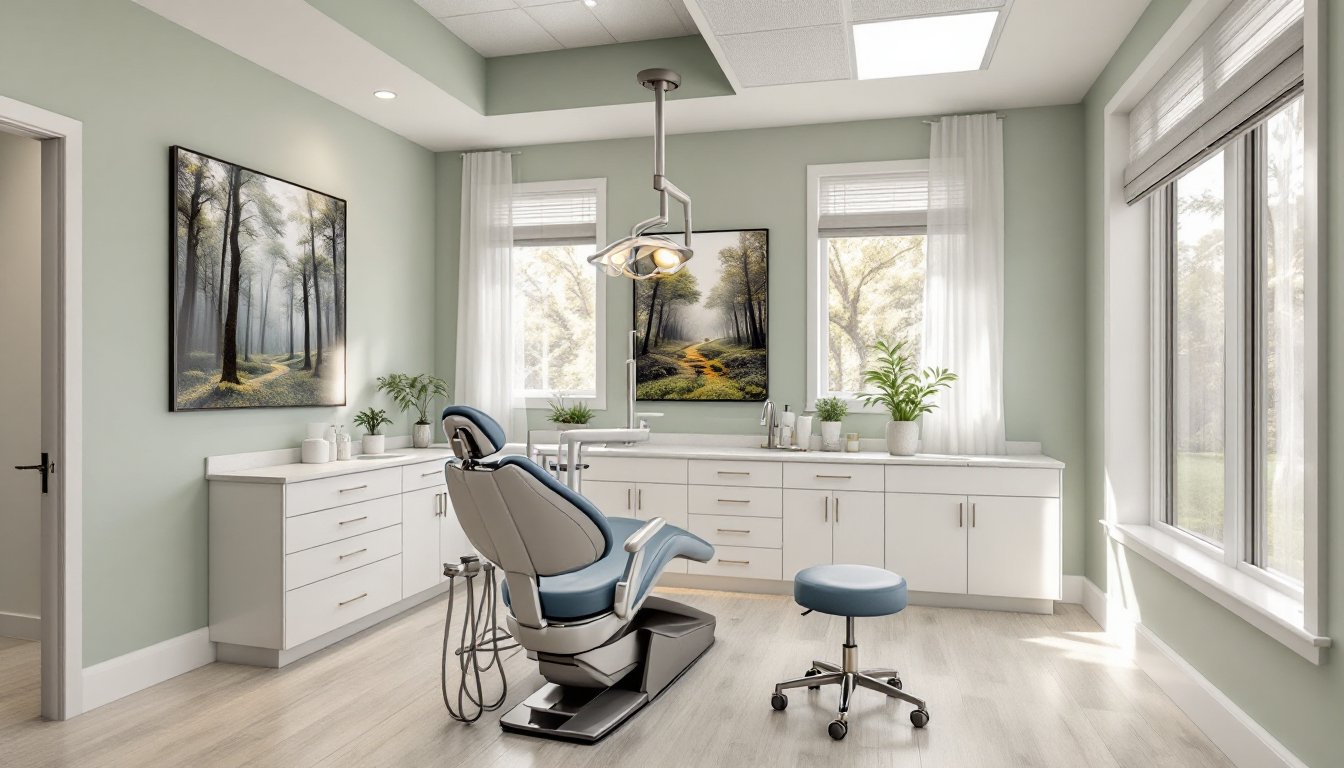
Operatories demand precision in layout. The dental chair should sit 8-10 feet from the doorway, allowing patients to settle without feeling immediately spotlit. Position equipment delivery systems (the arm holding the handpieces) on the dentist’s dominant side, typically 9 o’clock for right-handed practitioners, 3 o’clock for left-handed.
Cabinet placement affects workflow efficiency. Lower cabinets should sit 30 inches from the floor to match standard counter heights, with 18-24 inches of knee clearance underneath for the assistant’s stool. Upper cabinets need to stay above 54 inches to avoid head strikes when staff lean over patients.
Electrical and plumbing rough-ins can’t be afterthoughts. Each operatory requires dedicated circuits for the chair (20-amp), X-ray equipment (20-amp), and overhead lighting (15-amp minimum). The National Electrical Code (NEC) mandates GFCI protection for outlets within 6 feet of any water source, including the rinse basin. Dental equipment generates serious heat, plan for supplemental cooling or these rooms will cook in summer.
Storage must support infection control protocols. Closed cabinetry keeps supplies dust-free and meets CDC guidelines for clean zones. Use solid-surface countertops (quartz or solid acrylic) that seal flush to backsplashes, no grout lines to harbor bacteria. Install hands-free faucets and soap dispensers to reduce cross-contamination. Some modern practices draw inspiration from contemporary clinic renovations that blend dark accents with functional elements.
Color Schemes and Lighting That Reduce Patient Anxiety
Forget sterile white-on-white. Research in color psychology shows that soft blues, greens, and warm grays lower blood pressure and heart rate. Reserve white for cabinetry and trim where it signals cleanliness, but bring in muted sage, slate blue, or warm taupe on walls to break the institutional vibe.
Avoid high-contrast patterns or busy wallpaper in operatories. Patients spend appointments staring at ceilings, choose a calming solid or very subtle texture. Consider a ceiling-mounted nature photograph or sky panel directly above the chair. It’s a small investment (around $200-500 for quality printed panels) that gives patients a focal point during procedures.
Lighting makes or breaks the space. Overhead fluorescents with poor Color Rendering Index (CRI) cast sickly green tones and flicker at frequencies that trigger migraines. Upgrade to LED panels with CRI 90+ that mimic natural daylight. Operatories need task lighting (the articulating overhead light for the dentist) plus ambient lighting (softer recessed cans or wall sconces) to reduce harsh shadows.
Dimmer switches give control over intensity throughout the day. Morning appointments benefit from brighter settings: late afternoon patients often prefer softer light. Install dimmers rated for LED loads (not old incandescent dimmers, which cause LEDs to buzz and flicker). Budget $40-80 per dimmer for quality units.
Natural light works wonders in reception and consultation rooms but requires management in operatories. Direct sunlight creates glare on monitors and washes out the dentist’s view. Use blackout roller shades behind sheer panels, pull the sheers for soft diffusion, drop the blackout when precision work demands it.
Materials and Finishes for Durability and Hygiene
Dental clinics see constant foot traffic and require aggressive cleaning protocols. Materials must withstand daily disinfection without degrading. Luxury vinyl plank (LVP) flooring outperforms traditional vinyl tile in clinical settings, it’s waterproof, dent-resistant, and available in wood-look or stone-look finishes that feel less institutional. Look for products with 20-mil wear layers rated for commercial use.
Carpet has no place in operatories or sterilization areas. It traps contaminants and can’t handle liquid spills. If you want sound dampening in admin areas, use low-pile, solution-dyed nylon with antimicrobial treatments, and vacuum daily with HEPA filtration.
Wall finishes need to handle repeated cleaning with hospital-grade disinfectants. Semi-gloss or satin latex paint wipes clean without showing scuffs. For high-impact zones (behind chairs, along hallways), consider fiberglass-reinforced panels (FRP) or solid vinyl wall covering, both are nearly indestructible and meet fire codes for healthcare applications. Many design-conscious practices leverage techniques found in professional design portfolios to balance durability with visual appeal.
Countertops endure instrument trays, chemical spills, and hot sterilization pouches. Quartz (like Caesarstone or Cambria) offers non-porous surfaces that won’t stain or harbor bacteria. It costs $50-100 per square foot installed, but lasts decades. Solid-surface acrylic (Corian-type products) runs $40-80 per square foot and allows seamless integration of sinks, though it scratches more easily than quartz.
Cabinets should be thermofoil or high-pressure laminate rather than wood veneer. These finishes don’t swell when exposed to humidity from autoclaves and sinks. European-style frameless cabinets have fewer crevices than traditional face-frame construction, making them easier to keep clean.
Budget-Friendly Design Ideas for Small Dental Practices
Not every clinic renovation requires a gut job. Strategic updates deliver impact without six-figure invoices. Start with paint and lighting, these two changes alone can transform dated spaces for under $5,000 in a small practice. Repaint walls in calming colors, swap fluorescent fixtures for LED panels, and add dimmer controls.
Vinyl wall decals offer customizable artwork at a fraction of mural costs. Quality decals (from companies like Wallums or Blik) run $100-400 and install in under an hour. Choose nature scenes, abstract patterns, or even custom designs that reinforce branding. They’re removable, so you can refresh the look every few years without repainting.
Reface cabinets instead of replacing them. If the cabinet boxes are sound, new doors and drawer fronts plus fresh hardware costs 30-50% less than full replacement. Pair refacing with new countertops for a cohesive update. For quick inspiration, platforms like Homify showcase global design trends that adapt to various budgets.
Retail lighting techniques work in clinical spaces. Track lighting with adjustable heads highlights artwork and creates visual interest without hardwiring new junction boxes. Add plug-in LED strip lights under upper cabinets for task lighting that costs under $50 per run.
Furniture doesn’t have to be medical-supply-catalog beige. Commercial-grade seating from office furniture retailers (Herman Miller, Steelcase, or even IKEA’s business line) often beats dental-specific chairs on both price and aesthetics. Look for cleanable fabrics (vinyl, polyurethane, or tightly woven solution-dyed textiles) with ratings for 100,000+ double rubs.
DIY-friendly projects include building a reception desk surround from stock cabinetry and a custom countertop, installing floating shelves for product displays, or creating a gallery wall with framed certifications and local art. These tasks require only basic carpentry skills, a miter saw, drill, and level get you there. Cost estimators on sites like ImproveNet help budget for contractor-dependent work versus DIY-able tasks.
Prioritize patient-facing areas first. Patients never see your break room or filing systems, but they absolutely notice the reception desk, waiting area, and operatory. Allocate funds where they directly impact patient experience and perception of care quality. If formal contracts become necessary when hiring designers, reviewing standard contract templates helps protect both parties.
Safety note: Any work involving plumbing, electrical beyond simple fixture swaps, or structural changes requires permits and often licensed professionals. Dental equipment installation must meet manufacturer specifications and local health department codes. Don’t risk your license trying to DIY these systems, some savings aren’t worth it.