
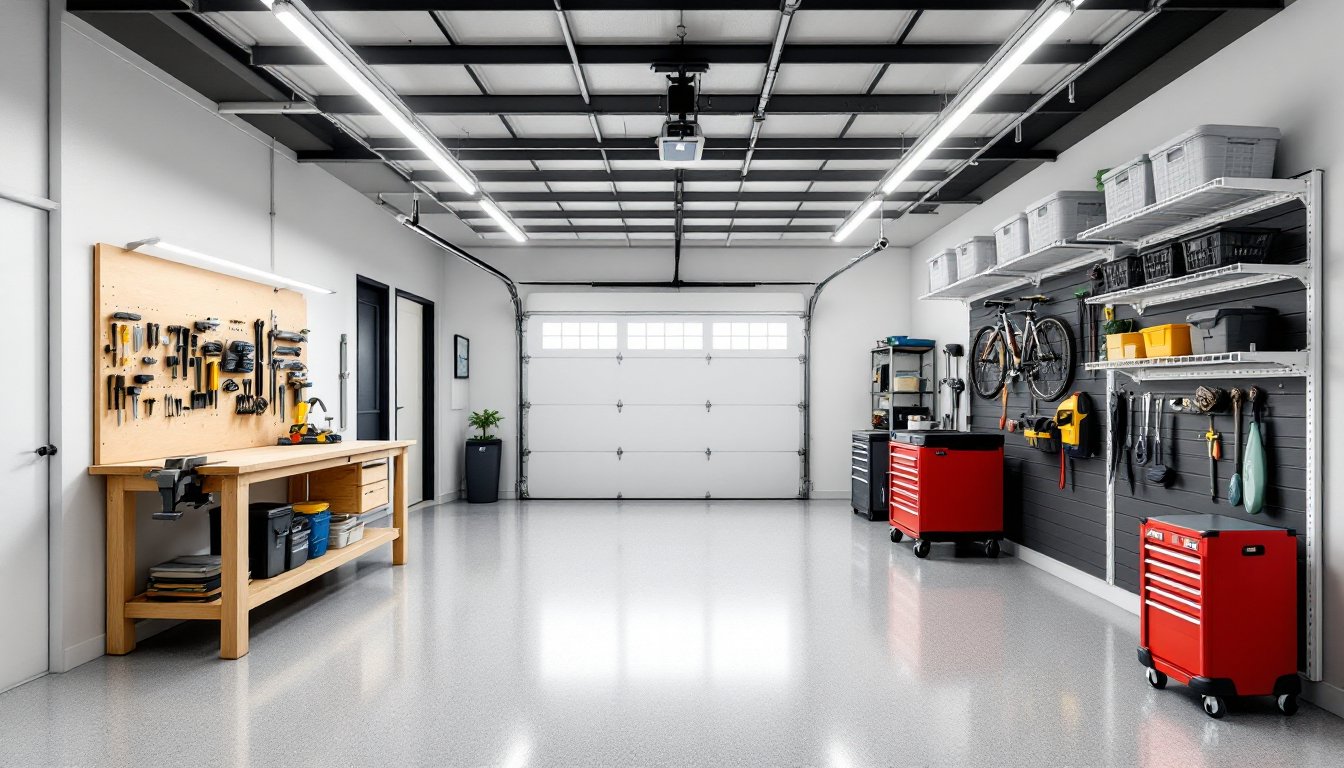
Most garages are dark, cluttered catchalls for whatever doesn’t fit in the house. But with solid planning and the right upgrades, a garage can become a well-organized workshop, hobby studio, or even a space worth showing off. Transforming a garage <a href="https://drjamesmeehanmdtulsa.com/interior-design-business-cards/”>interior isn’t about cosmetic tricks, it’s about smart storage, durable finishes, proper lighting, and layouts that actually work. This guide covers practical garage interior design ideas that balance function with aesthetics, from flooring and wall treatments to zoning systems that make the space multi-purpose.
Table of Contents
ToggleKey Takeaways
- Assess your garage’s intended use—workshop, storage, gym, or hobby studio—before planning upgrades, as this determines electrical needs and layout decisions.
- Smart storage solutions like overhead racks, wall-mounted cabinets, and vertical organization systems maximize space by keeping items off the floor and freeing room for vehicles and work zones.
- Epoxy coatings and interlocking floor tiles are the most popular garage interior design options, offering durability against vehicle traffic, oil stains, and temperature changes while improving aesthetics.
- Upgrade lighting from standard builder-grade fixtures to LED shop lights (4000–5000K) mounted parallel to the garage door for even illumination and better task performance.
- Zone your garage into distinct areas for workbenches, vehicle maintenance, hobbies, and storage to create an organized, multi-purpose space that invites regular use.
- Choose light wall colors and semi-gloss paint finishes to reflect light and resist moisture, and consider wall panels or insulated drywall for a more polished, climate-controlled finish.
Planning Your Garage Interior Transformation
Before buying a single shelf bracket, homeowners should assess how they’ll actually use the space. A garage can serve as a workshop, storage room, gym, hobby area, or combination of several functions. The intended use dictates everything from electrical requirements to floor finish.
Start by measuring the full interior: length, width, ceiling height, and door clearances. Standard two-car garages measure roughly 20×20 feet, but dimensions vary. Note the location of existing outlets, lighting fixtures, windows, and the garage door opener. Mark any structural elements like support posts or exposed studs that can’t be moved.
Consider whether the project involves structural changes. Installing new electrical circuits, upgrading insulation, or adding HVAC typically requires permits and may need a licensed electrician or HVAC contractor. Non-structural upgrades like painting, installing storage systems, or laying interlocking floor tiles usually don’t require permits, but always check local building codes.
Draft a rough zone map. Allocate wall and floor space for specific activities: workbench area, vehicle parking, seasonal storage, sports gear, gardening tools, and so on. This planning step prevents the common mistake of installing beautiful cabinets in spots that block car doors or workflow.
Smart Storage Solutions That Maximize Space
Effective garage storage hinges on getting items off the floor and onto walls or overhead. Floor space should be reserved for vehicles, large tools, and work zones, not piles of boxes.
Cabinets and shelving units come in metal, plywood, or heavy-duty plastic. Metal cabinets resist moisture and pests better than particleboard, which can swell if the garage isn’t climate-controlled. Freestanding steel garage cabinets typically measure 36 inches wide and 72 inches tall, with adjustable shelves rated for 50–100 pounds per shelf. Wall-mounted cabinets save floor space but must be anchored into studs or blocking.
Overhead storage racks mount to ceiling joists and hold bins, seasonal items, or rarely used gear. Most racks are rated for 300–600 pounds depending on joist spacing and installation quality. Verify ceiling height: racks should hang at least 4 feet above the garage floor to clear vehicle roofs and provide head clearance.
Pegboard and slatwall organize hand tools, extension cords, and small items at eye level. Pegboard is inexpensive but less robust: slatwall panels are heavier-duty and accept a wider variety of hooks and brackets. Both should be mounted on furring strips (1×2 or 1×3 lumber) spaced 16 inches on center to provide clearance for hooks.
Wall-Mounted Systems and Vertical Organization
Vertical storage transforms wasted wall space into high-capacity zones. Track systems (also called rail systems) mount horizontally to studs and accept movable hooks, baskets, and tool holders. These systems are more flexible than pegboard because accessories slide along the track and reposition without drilling new holes.
For long-handled tools like rakes, shovels, and brooms, utility hooks or specialized tool racks prevent the tangle that happens when tools lean in a corner. Rubber-coated hooks protect tool handles and prevent slipping.
Bike storage can be wall-mounted horizontal hooks or vertical stands that hang bikes by the front wheel. Vertical bike racks save floor space but require at least 6 feet of ceiling clearance. Horizontal hooks work for standard ceiling heights and are easier for kids to access.
When installing any wall-mounted system, locate studs with a stud finder and use lag screws or heavy-duty wood screws (minimum 3 inches long for 2×4 studs). Drywall anchors aren’t sufficient for heavy loads. For concrete or block walls, use Tapcon screws or expansion anchors rated for the expected load.
Flooring Options for Style and Durability
Garage floors take serious abuse: vehicle traffic, oil drips, dropped tools, snow melt, and temperature swings. The right flooring upgrade improves durability, safety, and appearance.
Epoxy coatings are the most popular garage floor finish. A two-part epoxy creates a hard, chemical-resistant surface that resists oil stains and hot-tire pickup. Proper surface prep is critical: the concrete must be clean, dry, and etched or ground to ensure adhesion. Moisture testing is essential: applying epoxy over damp concrete leads to delamination. Full broadcast flake systems (where decorative chips are scattered into wet epoxy) hide imperfections and add slip resistance. Epoxy cures in 24–72 hours depending on temperature and humidity. Coverage averages 250–300 square feet per gallon for two coats.
Interlocking floor tiles (PVC, polypropylene, or rubber) install without adhesive and can be removed or reconfigured. Tiles typically measure 12×12 inches or 20×20 inches and snap together via edge tabs. They’re DIY-friendly and forgiving over cracked or stained concrete, but seams can trap dirt and moisture. Coin-top, diamond-plate, and smooth finishes are available: textured surfaces provide better traction.
Polyurea and polyaspartic coatings are similar to epoxy but cure faster and tolerate a wider temperature range during application. Professionals often prefer polyaspartic for quick turnarounds. These coatings are more expensive and usually require professional installation.
Concrete stain or paint is the budget option. Acid stains create variegated, permanent color by reacting with concrete minerals. Water-based stains offer more color choices and are easier to apply. Concrete floor paint is less durable than epoxy and may peel under hot tires if the surface isn’t properly prepped. All painted or coated floors benefit from a clear sealer for added protection.
Lighting Design to Brighten Your Garage
Standard builder-grade garage lighting, a single bare bulb or basic fixture, creates dim, shadowy conditions unsuitable for detailed work. Upgrading lighting improves safety, productivity, and the overall feel of the space.
LED shop lights are the workhorse of garage lighting. Four-foot or eight-foot fixtures provide broad, even illumination and draw far less power than fluorescent tubes. Look for fixtures rated 4000–5000 lumens per four-foot fixture. Color temperature matters: 5000K (daylight) offers crisp, bright light ideal for task work: 4000K (neutral white) is slightly warmer and less harsh for general use.
Mount overhead lights parallel to the garage door, centered over work areas and vehicle parking spots. For a two-car garage, four to six four-foot LED fixtures provide adequate coverage. Space fixtures roughly 4 feet apart for even light distribution.
Task lighting supplements overhead fixtures at workbenches, tool chests, and detail areas. Adjustable LED clamp lights, under-cabinet strips, or swing-arm lamps allow focused illumination without shadows. Workbench lighting should be mounted above and slightly in front of the work surface to minimize glare.
Electrical considerations: Adding new lighting circuits may require upgrading the garage subpanel or running new wire from the main panel. This is a job for a licensed electrician if the homeowner isn’t comfortable working inside a breaker panel. Hardwired fixtures are neater than plug-in shop lights but require more installation effort. Plug-in fixtures are DIY-friendly and relocatable.
Motion-sensor switches or occupancy sensors save energy by turning lights on when someone enters and off after a set delay. Dimmer switches (compatible with dimmable LED fixtures) let users adjust brightness for different tasks.
Color Schemes and Wall Treatments
Garage walls are typically bare drywall or exposed studs with minimal finish. A fresh coat of paint or alternative wall covering elevates the space from utilitarian to intentional.
Paint color should be light to reflect available light and make the space feel larger. White, light gray, or beige are practical choices. Semi-gloss or satin finishes resist moisture and clean more easily than flat paint. For unfinished drywall, prime first with a PVA drywall primer. If the garage isn’t climate-controlled, use exterior-grade paint to handle humidity and temperature swings.
Some homeowners prefer an accent wall in a darker or bolder color behind a workbench or tool wall, which can ground the space and hide scuffs. Avoid dark colors on all walls in garages with limited natural light: they absorb light and make the space feel cave-like.
Wall panels like PVC slatwall, FRP (fiberglass-reinforced panels), or beadboard wainscoting add texture and protect drywall from impacts. FRP panels are common in commercial garages and workshops because they’re moisture-resistant and easy to clean. They install with panel adhesive and trim molding. Slatwall panels double as functional storage when paired with hooks and accessories.
For a cleaner, more finished look, homeowners can install drywall over exposed studs, then paint. This requires taping, mudding, and sanding, standard drywall finishing skills. It’s worth the effort if the garage will be heated, cooled, or used as a flexible living area. Adding batt insulation (R-13 or R-15 for 2×4 walls) between studs before drywalling improves temperature control and reduces noise.
Multi-Purpose Garage Zones for Hobbies and Work
Garages often serve multiple roles. Zoning the space, dedicating specific areas to distinct functions, prevents chaos and maximizes usability.
Workbench zone: A sturdy workbench is the heart of any garage workshop. Benches built from 2×4 framing and 3/4-inch plywood or MDF tops handle heavy use. Standard bench height is 36 inches, but taller users may prefer 38–40 inches. Mount the bench to wall studs for stability. Include a vise, pegboard backsplash, and task lighting. Electrical outlets (ideally on a dedicated 20-amp circuit) should be within easy reach.
Vehicle maintenance area: If the garage will be used for car or bike maintenance, plan for a floor jack, jack stands, and tool cart storage. A smooth epoxy floor makes cleanup easier and protects concrete from oil stains. Wall-mounted shelving keeps oil, fluids, and parts organized.
Hobby and craft zone: Hobbies like woodworking, painting, pottery, or model building often require dedicated space with good ventilation. Dust collection or exhaust fans help manage airborne particles. Foldable or rolling tables provide work surfaces that can be stowed when not in use.
Sports and recreation storage: Bikes, kayaks, skis, and camping gear take up significant floor space if stored haphazardly. Ceiling-mounted pulley systems lift kayaks and canoes overhead. Wall-mounted bike racks and sports equipment organizers keep gear accessible but out of the way.
Seasonal storage: Bins labeled by season (holiday decorations, winter clothing, camping gear) can be stored on overhead racks or high shelves. Clear bins make contents visible: opaque bins protect light-sensitive items.
Physically separating zones with painted floor lines, area rugs (in climate-controlled garages), or freestanding shelving units reinforces the organization system. Each zone should have its own lighting and, if needed, dedicated power outlets. For inspiration on balancing aesthetics with utility, projects on sites like Curbly showcase creative zoning and storage hacks.
Safety equipment and PPE storage: Every garage should have a dedicated spot for safety glasses, hearing protection, dust masks, and a fire extinguisher (rated for Class B and C fires, covering flammable liquids and electrical). Mount the extinguisher near exits and keep a first-aid kit in an accessible cabinet. If storing flammable materials (paint, solvents, gasoline), use a metal flammable storage cabinet that meets OSHA standards.
Zoning isn’t just about organization, it’s about creating a space that invites use rather than overwhelming the homeowner every time the garage door opens.