Choosing an interior design style isn’t about chasing trends, it’s about finding a look that fits how you live and what you’re willing to maintain. Whether you’re refreshing a single room or tackling a whole-house renovation, understanding the core characteristics of popular design styles helps narrow down finishes, furniture, and color palettes before you start shopping or swinging a hammer. This guide breaks down classic, modern, rustic, and eclectic aesthetics with enough detail to guide material choices and project planning without the lifestyle fluff.
Table of Contents
ToggleKey Takeaways
- Understanding the core characteristics of popular interior design styles—from traditional to contemporary—helps guide material choices and project planning before starting any renovation.
- Interior design styles range from classic, timeless approaches like traditional and transitional to modern alternatives such as mid-century modern and minimalist aesthetics.
- Rustic and natural interior design styles celebrate raw materials and handcrafted details, including options like cabin style, industrial, and the forgiving farmhouse approach.
- Eclectic and bold interior design styles like bohemian, art deco, coastal, and Scandinavian allow for personal expression by mixing influences, eras, and patterns with intentional curation.
- Many interior design styles projects are DIY-friendly—from swapping cabinet hardware and installing floating shelves to painting accent walls and building farmhouse tables.
- Successful design execution depends on selecting a style that fits how you live and what you’re willing to maintain, rather than chasing temporary trends.
Classic and Timeless Interior Design Styles
Classic styles lean on symmetry, quality materials, and historical references. They age well because they avoid trendy finishes and favor neutral palettes with layered textures.
Traditional Style
Traditional interiors reference 18th- and 19th-century European design, think crown molding, wainscoting, and furniture with turned legs or carved details. Color palettes center on warm neutrals: taupe, cream, navy, burgundy, and forest green.
Key materials include hardwood flooring (oak, cherry, or walnut in 3¼-inch strips), area rugs with Persian or Oriental patterns, and upholstered furniture in damask, velvet, or linen. Windows get formal treatments: layered drapery with valances, often floor-to-ceiling.
Mill work is a big part of the aesthetic. Chair rails typically sit 32–36 inches from the floor: crown molding ranges from 3½ to 5½ inches depending on ceiling height. If you’re adding trim, use a miter saw for clean corner joints and a brad nailer for installation. Paint-grade MDF works for painted finishes: for stain, use solid wood.
Traditional kitchens favor raised-panel cabinetry in cherry or maple, often with a glaze or distressed finish. Countertops lean toward granite or marble. In bathrooms, expect pedestal sinks, clawfoot tubs, and ceramic tile in subway or hexagon patterns.
This style requires commitment to detail work. If you’re DIYing trim installation, plan for careful measuring, coping inside corners, and caulking/filling nail holes before paint. It’s labor-intensive but very forgiving of minor imperfections once everything’s painted and staged.
Transitional style bridges traditional and contemporary by simplifying ornament, clean-lined furniture with classic proportions, neutral palettes, and minimal trim. It’s a practical middle ground if you want warmth without fussiness. Homeowners drawn to transition interior design often appreciate how it blends familiar comfort with streamlined finishes.
Modern and Contemporary Design Styles
Modern and contemporary get used interchangeably, but they’re distinct. Modern refers to mid-century design (1940s–1960s): contemporary is whatever’s current. Both favor clean lines and open floor plans.
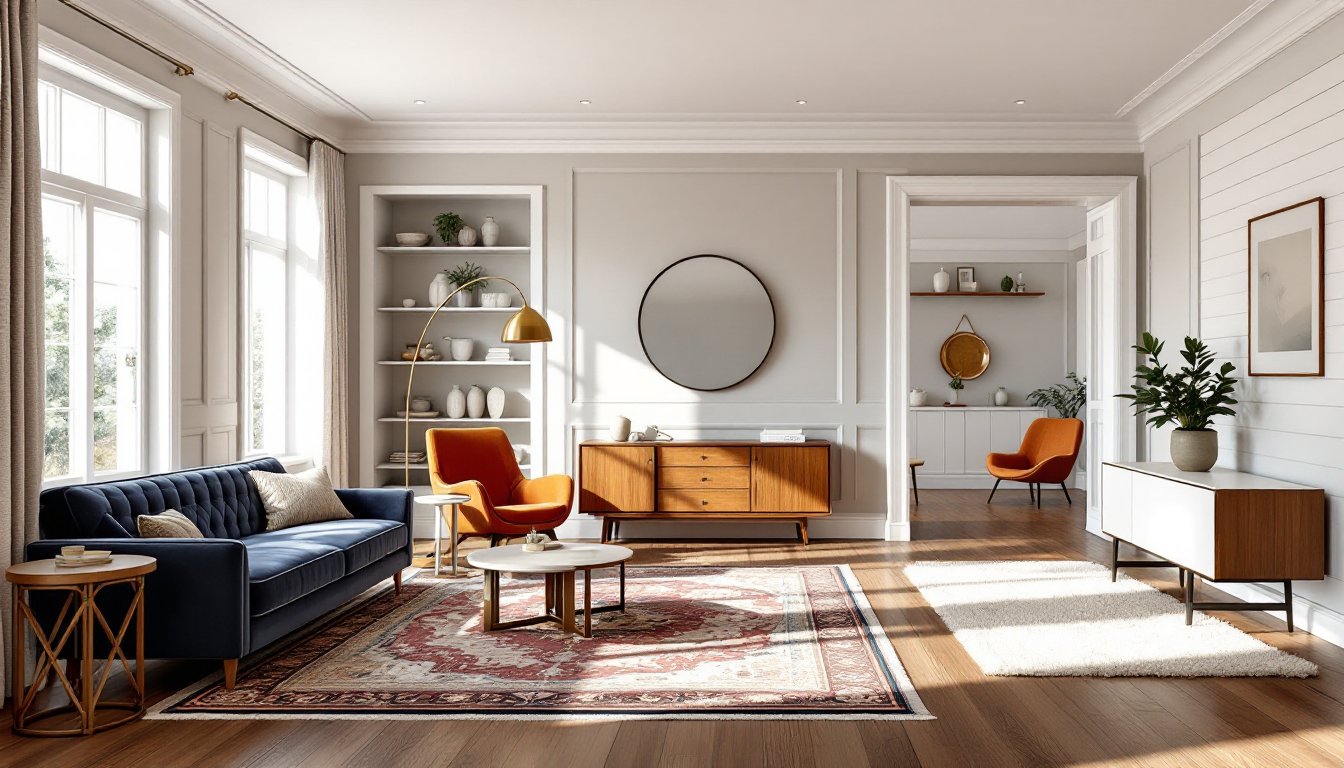
Mid-century modern uses natural materials, teak, walnut, leather, with minimal ornament. Furniture sits low to the ground with tapered legs. Expect bold accent colors (mustard, burnt orange, teal) against neutral walls. Flooring is often wide-plank hardwood or terrazzo. Lighting is sculptural: Sputnik chandeliers, arc floor lamps, pendant globes.
If you’re sourcing furniture, look for pieces with exposed joinery and organic shapes. Reproductions are common: originals can be pricey but hold value.
Contemporary style evolves with current trends but generally emphasizes open space, large windows, and neutral tones (gray, white, black, beige). Materials include polished concrete floors, quartz countertops, and flat-panel cabinetry with integrated pulls or push-to-open hardware.
Wall treatments are minimal, skip the trim and run drywall tight to the floor with a simple baseboard or reveal. Paint in matte or eggshell finish: high-gloss is rare except on accents. Lighting is recessed or linear LED strips, often on dimmer switches.
Contemporary kitchens favor slab-door cabinets in white, gray, or wood veneer. Backsplashes might be large-format porcelain, glass, or even painted drywall. Appliances are panel-ready or stainless.
Both styles benefit from DIY-friendly projects: swapping cabinet hardware, installing floating shelves (use heavy-duty brackets rated for the load), or painting walls in a monochromatic palette. Many colorful interior design approaches layer bold hues into contemporary frameworks without sacrificing the clean lines.
Minimalist Style
Minimalism strips contemporary design down further: fewer pieces, no clutter, functional over decorative. The mantra is “less is more,” but executed poorly, it reads as cold or unfinished.
Color palettes are achromatic, white, black, gray, with occasional natural wood tones. Furniture is simple and multi-functional. Storage is concealed. Walls stay bare or feature one large-scale piece of art.
Materials emphasize texture over pattern: concrete, steel, glass, and matte-finish paint. Flooring might be polished concrete, large-format tile, or light-colored hardwood.
From a DIY standpoint, minimalist spaces require excellent execution. Drywall seams, paint lines, and trim joints are visible, so take time with surface prep, sand to 220-grit, prime with a stain-blocking primer, and use a quality paint with good hide (one-coat coverage per gallon is roughly 350–400 square feet). Experts at MyDomaine frequently highlight how minimalist rooms rely on impeccable finishes and thoughtful negative space.
Built-ins work well here: floating vanities, flush-mount medicine cabinets, recessed shelving. If you’re framing a niche, use 2×4 studs on 16-inch centers and line with ½-inch drywall. Finish with a shadowline reveal instead of trim for a cleaner look.
Minimalism isn’t about deprivation, it’s about intentionality. Every item should earn its place.
Rustic and Natural Interior Design Styles
Rustic styles celebrate raw, natural materials and handcrafted details. They’re popular in rural settings but translate to urban spaces when done with restraint.
Rustic or cabin style uses reclaimed wood, stone, and metal. Think exposed beams (often faux beams made from lightweight polyurethane if structural members aren’t accessible), log furniture, and stone fireplaces. Color palettes pull from nature: browns, greens, reds, and warm grays.
Flooring might be wide-plank pine or reclaimed barn wood. If installing reclaimed material, check for nails, scrape off old finishes, and acclimate the wood for at least 72 hours in the space before install. Expect some cupping or gaps, that’s part of the aesthetic.
Walls can be shiplap, tongue-and-groove paneling, or drywall with a textured finish. For shiplap, use 1×6 or 1×8 pine boards, install horizontally with a nickel or quarter as a spacer for the reveal, and secure with a finish nailer into studs. Seal with polyurethane or leave raw if you want patina over time.
Rustic kitchens favor open shelving, butcher-block countertops, and farmhouse sinks. Cabinets might be knotty pine or alder with oil-rubbed bronze hardware. Lighting includes wrought iron chandeliers or pendant lights with Edison bulbs.
Industrial style overlaps with rustic but skews urban: exposed brick, steel I-beams, ductwork, and concrete floors. Furniture mixes metal frames with wood tops. Lighting is utilitarian, metal cage pendants, gooseneck sconces.
If you’re exposing brick, be prepared for dust and potential structural questions. Not all brick is load-bearing, but confirm before you start demo. Clean with a wire brush and TSP: seal with a breathable masonry sealer to prevent efflorescence.
Industrial spaces often repurpose materials: black pipe shelving (DIY-friendly with flanges, nipples, and tees from the plumbing aisle), reclaimed factory carts as coffee tables, or salvaged signage as wall art. The look celebrates history and imperfection, so don’t overthink the finish work. Resources like Homedit often showcase industrial interiors that balance raw materials with livable comfort.
Farmhouse Style
Farmhouse style has dominated DIY culture for a decade, blending rustic elements with a brighter, more polished finish. It’s approachable, family-friendly, and forgiving of wear.
Color palettes are soft: white, cream, light gray, sage, and muted blues. Wood tones are weathered or whitewashed rather than dark and heavy. Furniture is simple and sturdy, farmhouse tables with chunky legs, ladder-back chairs, slipcovered sofas.
Signature elements include shiplap walls (see installation notes above), barn doors on sliding hardware, apron-front sinks, and open shelving in kitchens. Floors are wide-plank hardwood, often in a light or gray-washed finish.
DIY farmhouse projects are everywhere: building your own farmhouse table (use 2×6 or 2×8 construction-grade lumber for the top, sand heavily, and finish with polyurethane or tung oil), installing a board-and-batten accent wall, or adding vintage-style lighting (look for reproductions of schoolhouse pendants or wire basket fixtures).
One caution: farmhouse can tip into theme-park territory if overdone. Limit the “Live, Laugh, Love” signage and focus on functional, well-made pieces. Mixing in opposition in interior design techniques, pairing soft textiles with industrial metals, for example, keeps the aesthetic grounded and less predictable.
Modern farmhouse cleans up traditional farmhouse with contemporary lines: sleek black window frames, matte-black fixtures, and less distressing on wood. It’s the most popular variation in new construction and flips.
Eclectic and Bold Interior Design Styles
Eclectic styles mix influences, eras, and patterns without a rigid rulebook. Done well, they feel curated and personal. Done poorly, they’re chaotic.
Bohemian (boho) layers textiles, plants, and global influences. Expect layered rugs, floor cushions, macramé wall hangings, and lots of greenery. Color palettes are warm and saturated: terracotta, mustard, jewel tones, and earthy neutrals.
Materials include rattan, wicker, jute, and reclaimed wood. Furniture is low and casual, daybeds, poufs, vintage finds. Lighting is soft: string lights, paper lanterns, or vintage lamps with fabric shades.
Boho is forgiving for DIYers because imperfection is part of the charm. Hang textiles with curtain rods or Command hooks, cluster thrifted art in asymmetrical groupings, and don’t stress about matching wood tones. If you’re installing shelving for plants, make sure brackets are rated for the weight, soil and ceramic pots add up fast.
Art Deco is the opposite: polished, geometric, and luxe. It references the 1920s and ’30s with bold patterns, metallic finishes (brass, chrome, gold), and rich materials like velvet, marble, and lacquer. Color schemes are dramatic: black and gold, navy and blush, emerald and cream.
Furniture has clean lines with decorative inlays or mirrored surfaces. Lighting is sculptural, think stepped or sunburst mirrors, tiered chandeliers, and sconces with frosted glass.
Art Deco projects require precision. If you’re painting geometric wall patterns, use a laser level and low-tack painter’s tape (like FrogTape or ScotchBlue). Remove tape while the paint is still slightly wet to avoid peeling. For a polished look, use semi-gloss or high-gloss paint on accent walls.
Coastal style brings beachy vibes inland with light, airy palettes, whites, blues, sandy beiges, and natural textures like sisal rugs, linen upholtery, and driftwood accents. Furniture is casual and slipcovered. Windows stay minimal: sheer curtains or woven shades.
Coastal works well in rentals because it’s light on permanent changes. Swap out hardware, add peel-and-stick backsplash in soft blues or whites, or paint an accent wall in a pale aqua (Benjamin Moore’s Palladian Blue is a popular choice).
Historical styles like those seen in Victorian home interiors or 1930s home interiors also fall into eclectic territory when layered with modern updates. Similarly, regional influences like New Orleans home interiors bring unique color and pattern mixes worth exploring.
Scandinavian (Scandi) blends minimalism with warmth. Palettes are soft and neutral, whites, grays, pale woods, with pops of black or muted pastels. Furniture is functional and beautiful: clean-lined sofas, simple wooden chairs, and lots of built-in storage.
Materials emphasize natural light and texture: light-colored wood (birch, ash, pine), wool textiles, and matte finishes. Floors are often pale hardwood or light laminate. Windows go undressed or use simple roller shades.
Scandi design is deeply practical. Storage solutions are integrated and unobtrusive. DIY projects include building simple plywood furniture (use ¾-inch birch plywood, edge-band with iron-on veneer, and finish with a clear matte sealer), installing pegboard organizers, or painting walls in a soft white with high LRV (Light Reflectance Value) to maximize brightness.
Maximalist is the antithesis of minimalism: more is more. Bold colors, mixed patterns, gallery walls, and layered decor. It requires confidence and editing, everything should still have intention, even if the room is dense.
Start with a strong base (neutral walls or a bold paint color), then layer in textiles, art, and furniture. Use the rule of threes for vignettes and vary heights for visual interest. Design experts at Decoist often feature maximalist spaces that balance abundance with cohesion.
Maximalist spaces benefit from good lighting and adequate storage to prevent actual clutter. If you’re hanging a gallery wall, lay it out on the floor first, then transfer measurements to the wall using painter’s tape as a guide.