A lake house isn’t just a structure on the water, it’s a retreat that should capture the calm, beauty, and natural rhythm of waterfront living. Designing its interior requires more than picking pretty colors: it demands materials that withstand humidity, layouts that frame views, and finishes that age gracefully in a lakeside climate. Whether updating a family cabin or starting fresh with new construction, the best lake house interiors blend durability with design, creating spaces that feel relaxed but refined. This guide walks through practical strategies for selecting materials, colors, furnishings, and finishes that make a lake house both beautiful and built to last.
Table of Contents
ToggleKey Takeaways
- Lake house interior design prioritizes moisture-resistant materials like white oak, stone, and natural textiles to withstand humid, waterfront climates while maintaining aesthetic appeal.
- A neutral color palette of warm whites, pale greige, and muted water-inspired tones (soft blues, slate, sage green) provides a backdrop that complements lake views rather than competing with them.
- Window placement and light-maximizing strategies—such as floating furniture to preserve sightlines and using sheer Roman shades—are essential for showcasing views and natural light in lakeside interiors.
- Performance fabrics and durable furnishings (solution-dyed acrylic, sealed wood, and high-density foam) resist mildew, stains, and moisture damage better than traditional upholstery and hold up to sandy, wet conditions.
- Seamless indoor-outdoor living is achieved through large folding glass doors, coordinated flooring transitions, and covered porch design that extends the functional waterfront experience.
- Subtle nautical accents—such as family heirloom paddles, vintage lake artwork, and maritime-inspired fixtures in aged brass—add character without appearing clichéd or overly themed.
Embrace Natural Materials and Textures
Natural materials anchor lake house design by echoing the surrounding landscape and aging well in humid environments. Reclaimed wood, stone, and natural fiber textiles offer authenticity that manufactured finishes can’t replicate.
For flooring, white oak or hickory planks hold up better than softer pines in high-traffic areas. White oak resists moisture warping and provides a lighter, airier foundation, similar to the approach used in Frank Ponterio’s Lake Michigan house, where the wood adds warmth without darkening narrow rooms. Finish with a water-based polyurethane for durability and easier maintenance than oil-based options.
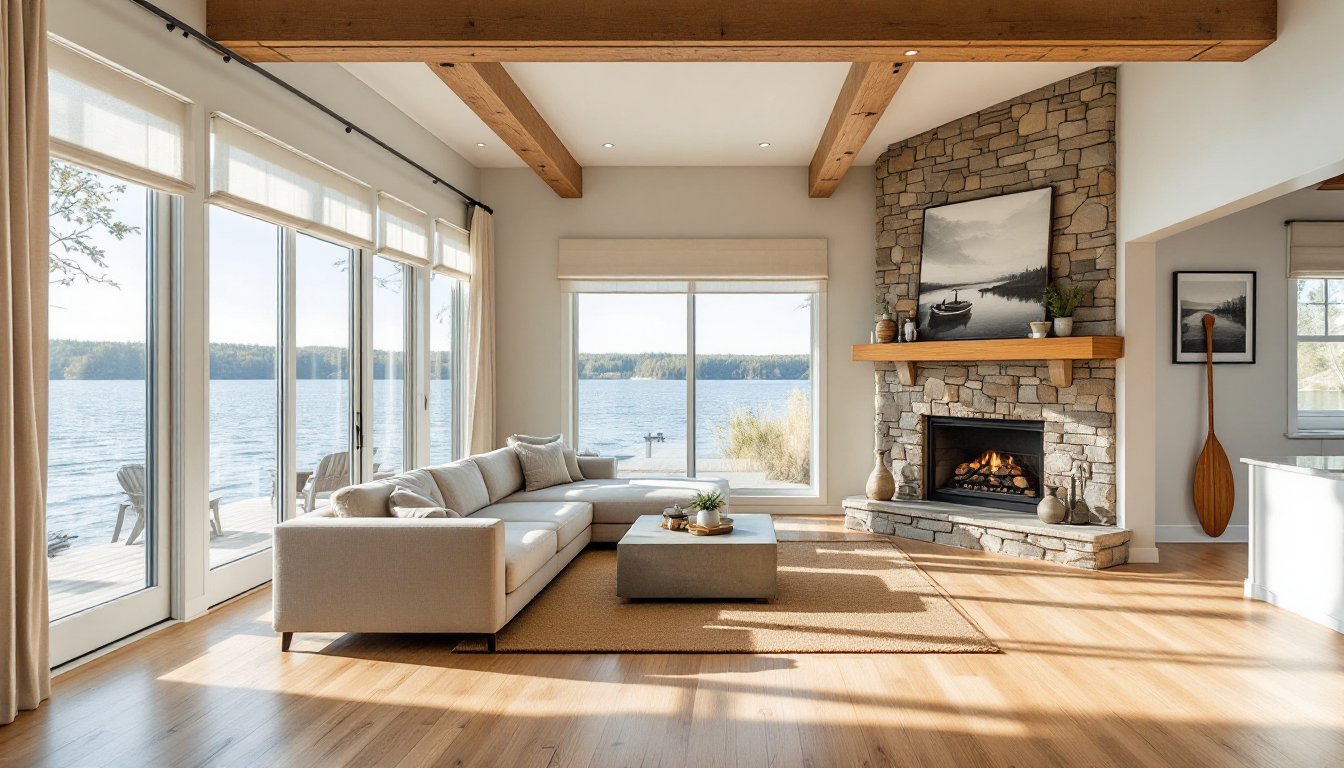
Exposed ceiling beams in Douglas fir or hemlock add vertical interest and rustic character without excessive weight. If structural beams aren’t an option, faux box beams clad in reclaimed barn wood offer a similar effect at lower cost and without altering load-bearing elements.
Stone accents, fieldstone fireplaces, slate tile backsplashes, or river rock shower floors, connect interiors to the lake’s geology. For fireplace surrounds, use mortar-set stone rather than veneer panels: real stone withstands heat cycling and humidity better and won’t delaminate over time.
Textiles should favor linen, cotton canvas, and jute over synthetics. Linen drapes filter light beautifully and dry quickly if湿气 builds up. Jute area rugs tolerate sandy feet and damp conditions better than wool, though they do shed initially, vacuum frequently in the first few weeks.
Choose a Color Palette Inspired by Water and Nature
Effective lake house palettes pull directly from the view: soft blues, grays, greens, and sandy neutrals that shift with the light and season. Avoid high-contrast schemes that fight the natural景色: instead, layer tones that complement morning mist and late-afternoon sun.
Start with a neutral base, walls in warm white (look for undertones with a hint of cream or gray, not stark blue-whites) or pale greige create a backdrop that won’t compete with lake views. Benjamin Moore’s White Dove or Sherwin-Williams’ Accessible Beige are reliable choices that read warm in north light and cool in southern exposures.
Accent walls or cabinetry in muted teal, slate blue, or sage green introduce color without overwhelming smaller rooms. For kitchen islands or bathroom vanities, consider navy or charcoal, they hide wear better than lighter paints and ground spaces with large windows.
Incorporating colorful accents through throw pillows, artwork, or pottery adds personality without long-term commitment. Swap out accessories seasonally: coral and aqua in summer, deeper indigo and forest green in fall.
Ceiling paint matters more than many assume. A soft blue-gray ceiling visually raises the height and reflects lake light more naturally than flat white. Test samples at different times of day, what looks perfect at noon may read purple at dusk.
Maximize Natural Light and Lake Views
Windows are a lake house’s most valuable asset. Positioning furniture, selecting treatments, and planning sightlines around them keeps the focus outward.
Arrange seating to face water views rather than TVs or fireplaces. In living rooms, float sofas and chairs away from walls to create conversation zones that don’t block window light. Use low-profile furniture, sectionals with shallow backs or armless slipper chairs, near windows to preserve sightlines from standing positions.
For window treatments, skip heavy drapes. Linen Roman shades or sheer roller shades offer privacy without blocking daylight. Mount hardware inside the window frame to maximize glass exposure, or use ceiling-mounted track systems that stack completely off the glass when open.
If privacy isn’t a concern, leave windows bare. Frosted or textured glass in bathrooms provides privacy while maintaining light, consider rain glass or reeded glass for shower enclosures and powder room windows.
Mirrors and reflective surfaces amplify natural light but should be placed thoughtfully. A large mirror opposite a window doubles perceived space and bounces light deeper into the room. Avoid mirrored furniture or excessive gloss finishes, which create glare and feel more Las Vegas than lakeside.
Skylight placement requires careful planning. A fixed skylight over a stairwell or hallway brings daylight into interior zones without introducing unwanted heat gain. Opt for low-E glazing to reduce UV damage to furnishings and improve energy efficiency, critical in rooms with southern exposure.
Select Durable, Weather-Resistant Furnishings
Lake houses endure more moisture, temperature swings, and foot traffic than suburban homes. Furnishings must be selected for longevity, not just aesthetics.
Upholstery fabrics should resist mildew and dry quickly. Solution-dyed acrylic (marketed as Sunbrella or similar) is no longer limited to outdoor-only patterns, many indoor collections now use it for sofas and chairs. It resists stains, fading, and mold better than cotton or linen blends. For a more traditional look, performance linen treated with Crypton or Nano-tex finishes offers a natural hand with built-in stain resistance.
Avoid down-filled cushions in humid climates, they absorb moisture and lose loft. Instead, choose high-density foam wrapped in Dacron or synthetic down alternative that dries faster and maintains shape.
Wood furniture in teak, eucalyptus, or aluminum frames with powder-coated finishes transition well between indoor and covered porch use. If using indoor-only pieces, ensure wood is sealed properly, marine-grade spar varnish provides better moisture protection than standard polyurethane.
Coffee tables and side tables in sealed concrete, metal, or stone hold up to wet glasses and sandy hands better than veneered MDF. For dining tables, consider epoxy-sealed live-edge slabs or solid wood with a rubbed oil finish that can be refreshed annually.
Rugs should be indoor-outdoor polypropylene or natural fiber with a tight weave. Avoid high-pile or shag styles that trap sand and moisture. Size rugs generously, at least front legs of seating should rest on the rug to anchor furniture groupings visually.
Create Seamless Indoor-Outdoor Living Spaces
Blurring the line between interior and exterior extends usable square footage and enhances the lake living experience. This requires thoughtful transitions in flooring, door systems, and furniture placement.
Folding or sliding glass door systems (like bifold, accordion, or lift-and-slide designs) open entire walls to decks or patios. These require structural headers capable of supporting the span, consult a structural engineer if replacing a standard door with an 8- to 12-foot opening. Installation is not a DIY project: improper flashing or threshold details lead to water intrusion and rot.
Match or closely coordinate interior and exterior flooring at transitions. If using tile inside, extend the same (or similar) porcelain tile rated for freeze-thaw cycles onto covered porches. Alternatively, transition from interior wood to composite decking in a complementary tone, avoid stark contrasts that visually chop the space.
Screened porches benefit from the same design attention as interior rooms. Use ceiling fans with damp ratings, outdoor-rated light fixtures, and furnishings that mirror interior style. Incorporating elements from rustic mountain interiors can add cozy charm to covered outdoor spaces.
Outdoor kitchens should include at minimum a grill, small refrigerator, and sink with hot water. Plumbing requires proper winterization in cold climates, install shut-off valves and drain points accessible from inside. Countertops in granite, quartzite, or concrete withstand weather better than laminate or butcher block.
For lighting, use low-voltage LED path lights and uplighting on trees to extend evening enjoyment. Avoid over-lighting the lake itself, excessive illumination disrupts wildlife and creates glare on the water.
Add Coastal and Nautical Decor Accents
Nautical decor walks a fine line between charming and clichéd. The goal is subtle nods to lakeside life, not a maritime museum.
Vintage oars, wooden boat paddles, or canoe paddles mounted on walls add vertical interest and tell a story, especially if they’re actual family heirlooms rather than big-box reproductions. Display them horizontally above doorways or stacked vertically in entryways.
Rope accents work best in functional applications: twisted jute rope as stair railing (check local codes, some jurisdictions require graspable rails), manila rope wrapped around porch columns, or cotton rope drawer pulls on bathroom vanities. Avoid decorative rope balls or excessive nautical knot displays.
Artwork should reflect the specific lake or region. Commission a local artist to paint the view from the dock, or frame vintage maps of the lake and surrounding waterways. Black-and-white photography of boats, piers, or shorelines reads more sophisticated than mass-produced anchor prints.
For textiles, ticking stripes in navy or indigo, linen in natural or chambray blue, and cotton canvas in sand or cream evoke a coastal feel without literal anchors or ships. Throw pillows in these patterns mixed with solid textures create a layered, lived-in look.
Consider design approaches from interior design galleries to curate a cohesive visual story rather than random nautical items.
Lighting fixtures in aged brass, oil-rubbed bronze, or matte black with clear or seeded glass shades reference maritime lanterns without literal ship wheels. Wall sconces flanking bathroom mirrors or porch entries work well in this style.
Conclusion
Successful lake house interiors balance aesthetic appeal with practical durability. By selecting moisture-resistant materials, framing views intentionally, and designing spaces that flow outdoors, homeowners create retreats that enhance waterfront living rather than fight it. Start with structural and finish decisions that handle the climate, then layer in color and decor that reflect the lake’s natural beauty. The result is a home that feels effortless, and lasts for decades of summer weekends and off-season getaways.